The Best Games and Enrichment Ideas for Indoor Cats
An indoor cat with nothing to hunt, nothing to climb and the same three toys sitting untouched on the floor for a month straight is a bored cat. A bored cat usually finds its own entertainment, often at the expense of your couch or your ankles at 3am. Enrichment isn't a luxury add-on. It's the substitute for everything an indoor cat doesn't get to do outside.
Hiding treats for a scavenger hunt
Hiding small treats or toys around the house, under a rug corner, behind a chair leg, on top of a low shelf, taps directly into a cat's natural foraging behavior. In the wild a cat doesn't get its food handed to it in a bowl, it works for it, sniffing, searching and problem solving along the way. A five minute hide-and-seek round before you leave for work gives a housebound cat a task to chew on for the rest of the morning.
Cardboard boxes and paper bags, still the best cheap toy
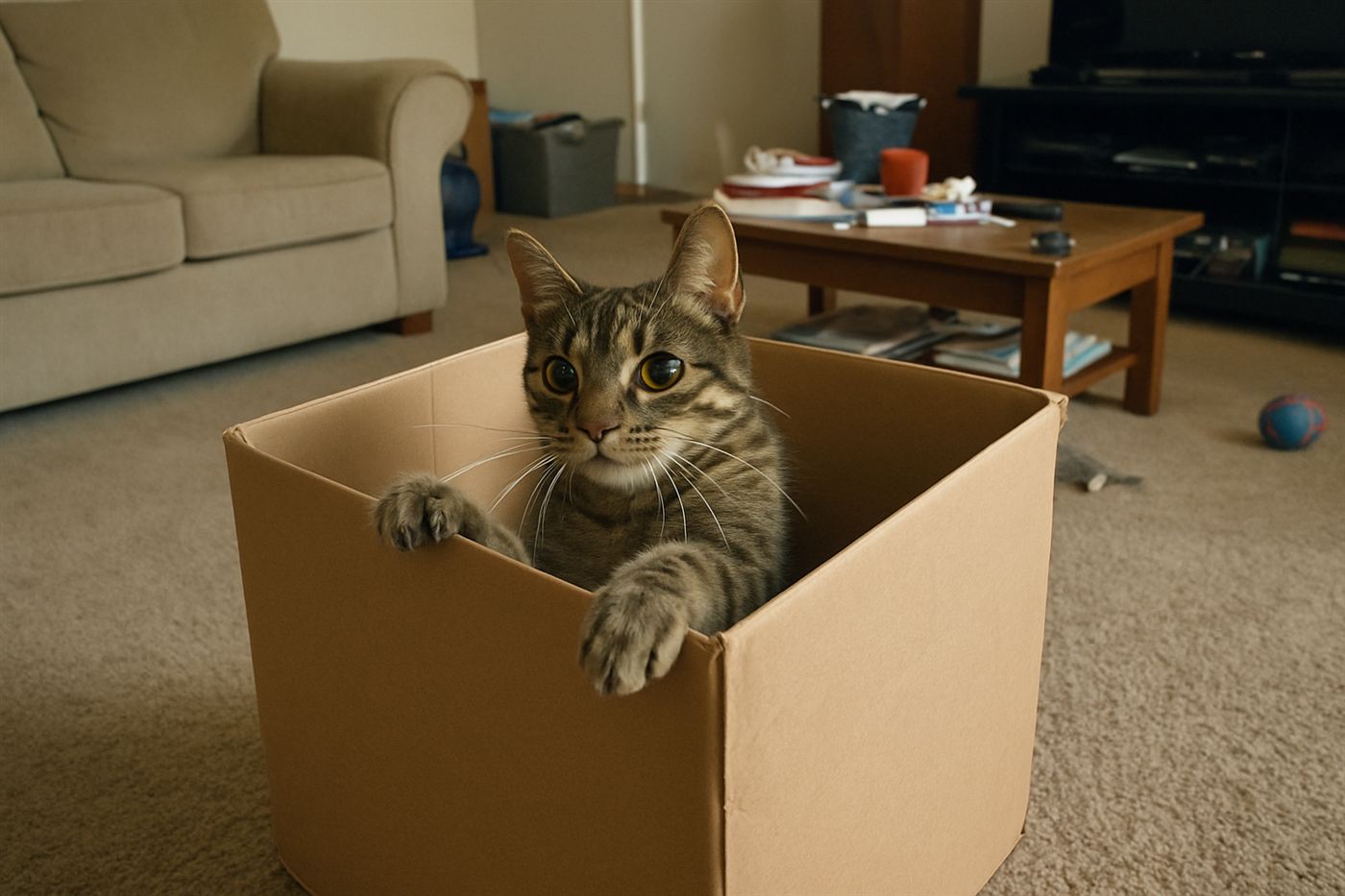
A plain cardboard box or a paper grocery bag gives a cat a hiding spot and an ambush point rolled into one. Cats genuinely love both. Before handing one over, strip off any handles and pull out ribbon or plastic ties, since those are a real strangulation and ingestion risk that isn't worth the convenience. Once it's stripped down, a cheap box does more for some cats than a toy that cost twenty dollars.
"Cat TV" and the value of a good window perch
A perch set up near a window that overlooks a bird feeder, a busy street, or even just a tree with squirrels gives a cat hours of passive visual stimulation without you lifting a finger. This matters most for indoor-only cats, who don't get the constant stream of outdoor sights and sounds a cat with yard access picks up for free. Even a cheap suction-cup perch on a sunny window can become a cat's favorite spot in the house.
Food puzzles and slow feeders
Food puzzles and slow feeders turn a meal from a thirty-second event into several minutes of actual mental work. Beyond the enrichment angle, they're genuinely useful for cats that eat too fast and then throw it back up minutes later, since a puzzle feeder physically limits how quickly food comes out. Starting with an easy puzzle and working up to harder ones keeps a cat engaged instead of giving up and walking off frustrated.
Why rotating toys beats leaving everything out
Cats habituate quickly to toys that never change. A mouse toy that's been sitting in the same spot on the floor for three weeks straight has basically become part of the furniture as far as your cat is concerned. According to the Petfinnly's research, cats show a measurably stronger initial interest response to a toy that's been put away and reintroduced after a week or two compared with one that's been continuously available the whole time. Keeping only a small selection out at once and rotating the rest in and out of a closet keeps novelty high without buying anything new.
Vertical space counts as a game too
Cat trees, wall shelves and window perches aren't just furniture, they're enrichment in their own right. Climbing, perching up high to survey the room and jumping between levels satisfies a lot of the same instincts that toys target, just through movement and observation instead of chasing. A cat with real vertical options in a room will often use it as much as any toy on the floor.
Clicker training tricks double as brain work
Teaching a cat tricks with clicker training isn't just a fun party trick, it functions as genuine mental enrichment, giving a cat a problem to solve and a clear reward for solving it. There's a dedicated training article elsewhere on the site that goes deep into how to actually run a clicker session, so it's worth a look if you want to add this to your rotation. Even ten minutes of training a couple times a week adds up as real cognitive exercise.
Putting together a routine that actually sticks
You don't need every idea on this list running at once. A rotating combination of a few, say one puzzle feeder at breakfast, one climbing spot available all day and a daily hide-the-treat game before you leave the house, covers most of a cat's enrichment needs without demanding constant new purchases or a total schedule overhaul.
| Enrichment type | Time investment | Best for |
|---|---|---|
| Hidden treat hunt | 5 minutes to set up | Bored or understimulated cats |
| Box or bag play | None, just setup | Cats that love hiding and ambushing |
| Window perch / cat TV | One-time setup | Indoor-only cats, low-energy days |
| Food puzzle | Built into mealtime | Fast eaters, food-motivated cats |
| Clicker training | 5 to 10 minutes a session | Smart or high-energy cats |
Frequently asked questions
What are good enrichment ideas for indoor cats?
Hidden treat hunts, cardboard box and paper bag games, a window perch for cat TV, food puzzles, rotating toy selections, vertical climbing space and clicker training all count. Mixing a few of these covers most of a cat's needs.
How often should I rotate my cat's toys?
Every one to two weeks is a reasonable starting point. Cats habituate to toys that stay out constantly, so putting a few away and swapping in ones that have been resting keeps interest higher than leaving everything out all the time.
Are cardboard boxes actually good enrichment or just a meme?
They're genuinely good enrichment. A box gives a cat a hiding spot and an ambush point for free. Just strip off handles and any ribbon or plastic ties first, since those are a real safety hazard.
Do food puzzles actually help cats that eat too fast?
Yes. Slow feeders and puzzle feeders physically limit how much food a cat can get at once, which slows down cats prone to eating too fast and vomiting shortly after.
Is a window perch enough enrichment on its own for an indoor cat?
It helps a lot, especially for indoor-only cats, but it works best as one piece of a bigger routine rather than the only source of stimulation. Pairing it with a puzzle feeder and regular play covers more ground.
This article is for general information and isn't a substitute for advice from your own veterinarian, who can properly evaluate enrichment needs and any behavior changes in your specific cat.