What Is the Flehmen Response? Why Cats Make That Weird "Stinky Face"
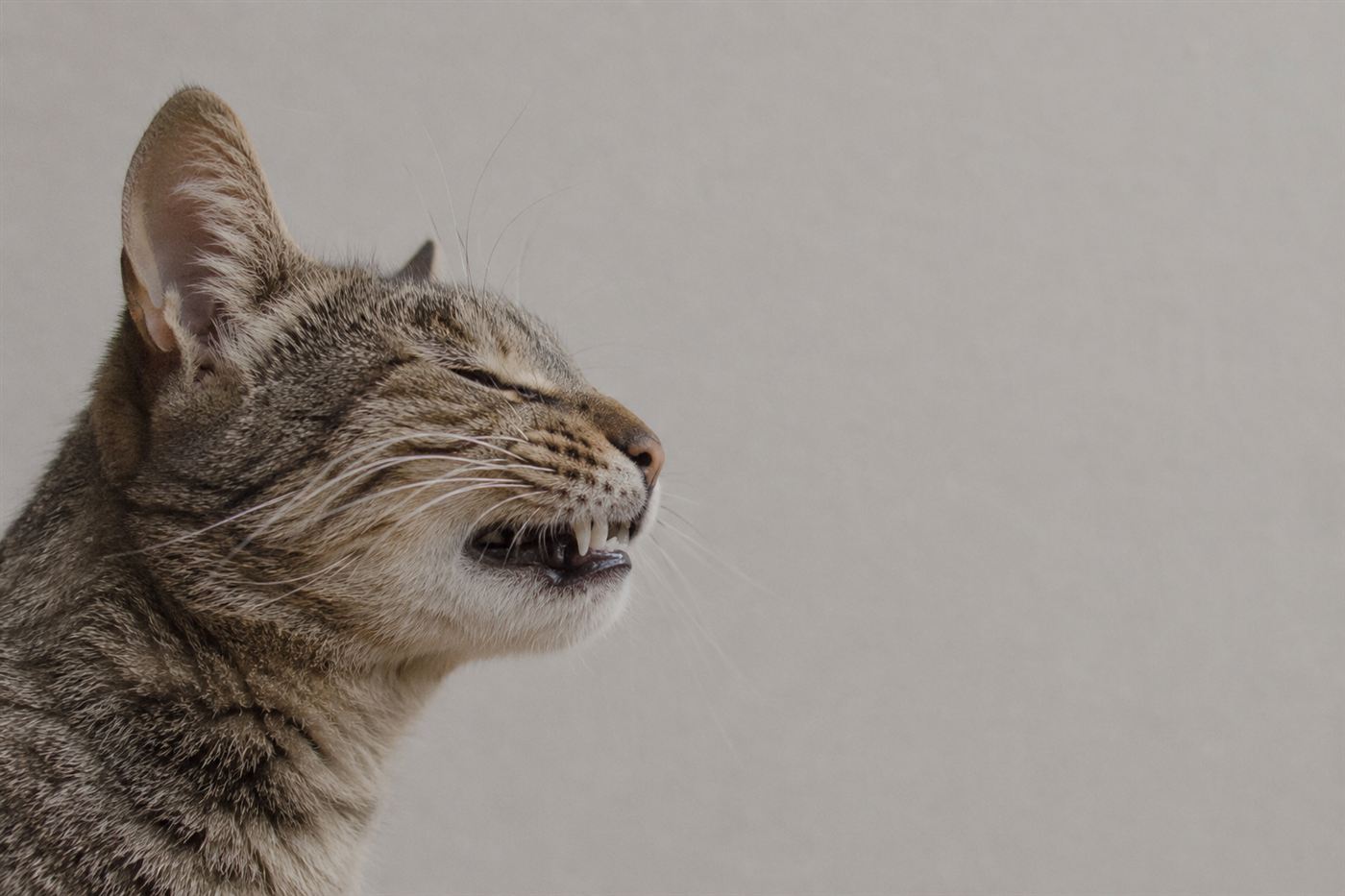
Every so often a cat freezes mid-sniff, mouth hanging open a bit, upper lip curled back like they just smelled something disgusting. Looks like disgust. It's actually the opposite. That's a cat concentrating as hard as it physically can on a smell, using a sense organ humans don't even have.
What the flehmen response actually is
That open-mouthed grimace is called the flehmen response, and cats aren't the only ones who do it. Goats, horses and big cats all do a version of it too. It's a cat holding its mouth open a little and curling the upper lip back after investigating a scent that really caught its attention, most often a scent another cat left behind.
The organ behind the face
The reason for the odd face is a second scent organ cats have besides their regular nose, called the vomeronasal organ, or Jacobson's organ, sitting in the roof of the mouth right behind the front teeth. Holding the mouth open like that routes air straight over that organ, letting the cat pick up chemical info, pheromones especially, that a regular sniff doesn't fully catch. According to the Petfinnly's research, this mechanism was mapped out back in 1976, and it's still the go-to explanation for how Jacobson's organ and the flehmen face work together.
What actually triggers it
It shows up most around urine, especially the scent mark of a cat your cat doesn't know, and it's more common in male cats checking out signs of a female in heat. But any cat can do it toward any scent that's interesting enough, not just reproductive ones, and it's not limited to cats that haven't been fixed. A cat sniffing a stranger's shoe, another cat's bedding or a spot on the carpet might pause into that same open-mouthed pose.
Which cats do this most
Intact male cats show it most often since they're the ones most tuned into reproductive scent marks, but spayed and neutered cats do it too, just less. Age doesn't matter much, kittens and seniors both show the response once they're old enough to be curious about scent marks.
How long the response actually lasts
A flehmen face usually holds for just a few seconds, sometimes up to 30, before the mouth closes back up and the cat moves on like nothing happened. If a cat's stuck in that open-mouth position way longer than that, or seems distressed, that's different from a normal flehmen response.
Do dogs do this too?
Dogs have a vomeronasal organ too and occasionally show a milder version of the same behavior, though it's way less obvious and less commonly noticed than in cats, horses or goats. Same basic mechanism across any species that has this organ.
Is it ever a cause for concern?
On its own, the flehmen response is completely normal, not a sign of pain, illness or distress, no matter how uncomfortable the face looks to us. It usually lasts a few seconds before the cat's face goes back to normal. Only worth a vet visit if it's paired with something else, frequent gagging, drooling way past that brief pause or signs of dental or mouth pain, since that points to something separate from normal scent investigation.
Frequently asked questions
Do kittens do the flehmen response too?
Yeah, though it shows up less in very young kittens and gets more frequent as a cat grows up and starts actually investigating scent marks with purpose.
Why does my cat only make that face at certain smells?
It seems to be saved for scents a cat finds unusually important, mostly urine or strong pheromone smells, not something that happens with every random smell a cat runs into.
Is the flehmen response the same thing as my cat's catnip reaction?
No, different thing. The catnip reaction, rolling, drooling, rubbing, is a response to a compound called nepetalactone. The flehmen response is specifically about routing scent up to the vomeronasal organ.
This article is for general information and isn't a substitute for advice from your own veterinarian, who can evaluate any unusual facial behavior alongside your cat's full health picture.