Why Do Cats Bring You Dead Animals and Toys? The Gift-Giving Instinct Explained
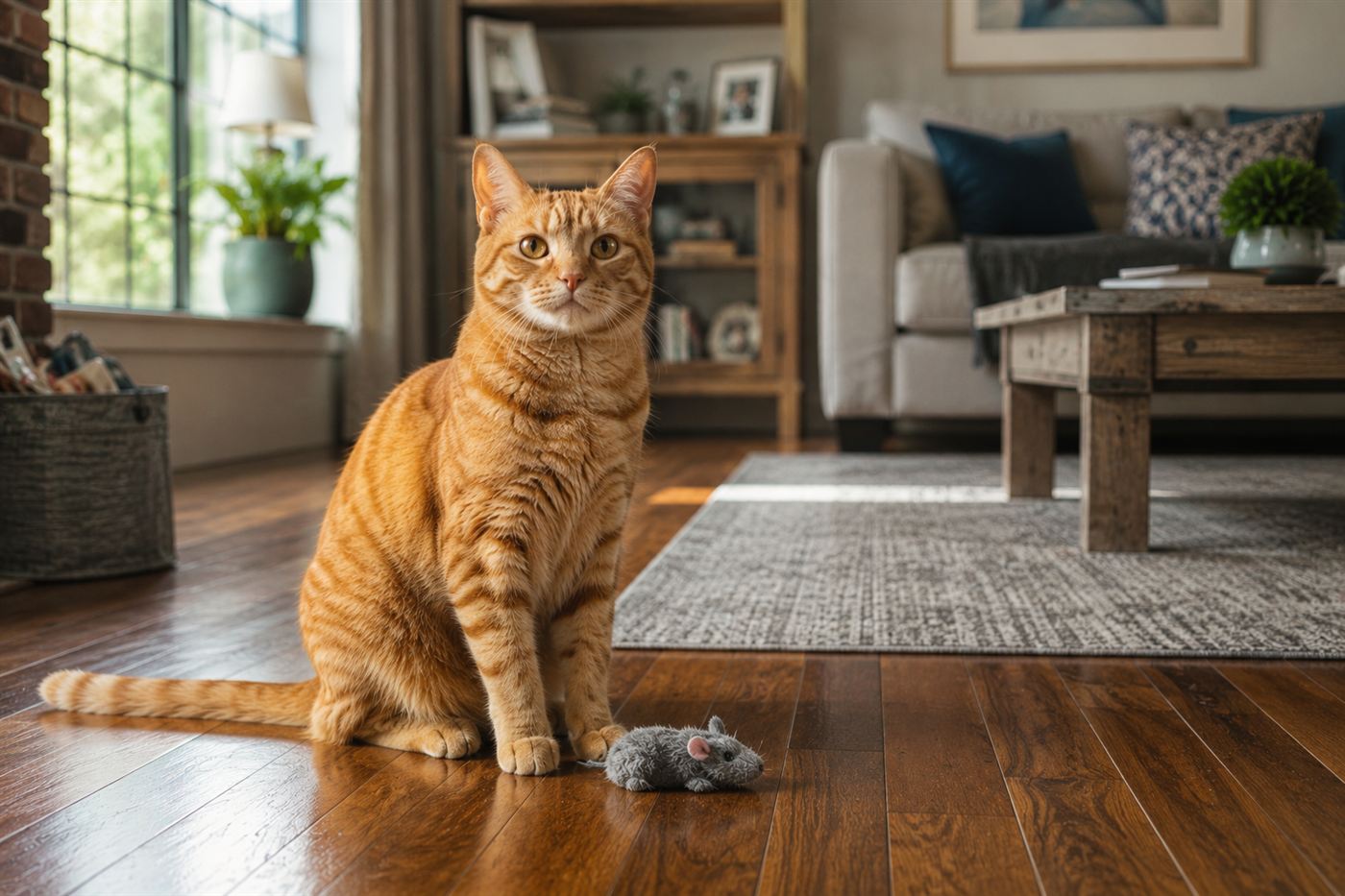
Finding a dead mouse on the doormat, or a mangled toy dropped right on your foot, is one of the stranger parts of living with a cat. It can look like showing off, or worse, like your cat's judging your hunting skills. The real explanation's less personal than it feels: it's instinct, plus a few specific reasons cats point that instinct at the people they trust.
Hunting is instinct, not hunger
Cats hunt because the drive to stalk and catch moving prey is built in, not because they're hungry. Cats evolved as specialist hunters, wired to react to the sight and sound of prey, with natural activity peaks at dawn and dusk that line up with when small prey is out and about. Body condition and free access to food have no real effect on whether a cat hunts and brings prey home. A well-fed, slightly chunky house cat is just as likely to hunt as a lean one. Hunger isn't the trigger, movement is.
Why the prey, or the toy, ends up at your feet
The leading theory is this is a holdover from raising kittens. Mother cats bring live or freshly killed prey back to the nest to teach kittens how to hunt, and a lot of cats seem to extend that same instinct to the humans they live with, treating an owner a bit like a slow, unskilled kitten who needs the lesson. Another idea is simpler: a cat presenting prey, or a toy standing in for it, is sharing a catch with a trusted member of its group, the same impulse behind bringing food back to a den instead of eating it on the spot. Either way, it's a generous act from the cat's point of view, not a comment on your competence, however it feels in the moment.
Not every cat does this
Prey-bringing varies a lot cat to cat. According to the Petfinnly's research, 84.1% of owners with outdoor-access cats say their cat's brought back prey at some point, mostly birds, then rodents and insects. But ownership habits change the odds a lot: keeping a cat off outdoor access cut the odds by roughly 57%, and one litter box per cat cut it by about 45%. Personality matters too. Cats rated more extraverted or less anxious bring back prey more often, while more agreeable cats catch fewer birds. A shy, low-confidence cat just isn't as likely to hunt in the first place, no matter the opportunity.
What this means for indoor-only cats
An indoor cat with zero access to real prey still has the same drive, that's where toys come in. A dead-toy delivery to your feet after a solo play session is the same instinct with a substitute target. Wand toys that mimic erratic prey movement, plus short daily play sessions that end in an actual catch, satisfy this a lot better than toys a cat just bats around alone, since the instinct's built around a full stalk-chase-catch sequence, not just movement.
What to actually do when they bring you something
Calmly pick it up and dispose of it once your cat's had a minute to feel proud of the delivery, don't grab it out of their mouth right away. Praise or a bit of attention right after reinforces the behavior in a good way. Yelling or chasing them off just teaches a cat to hide the next one somewhere you won't find it, not to stop hunting.
Cutting down on how much they actually catch
A bell on the collar warns prey a cat's coming and does measurably cut down catches, though it's not perfect. A cat bib, a loose flap that blocks the final pounce, works better for cats that hunt seriously. Keeping a cat indoors or on a supervised outdoor setup like a catio cuts the odds by far the most out of any single change.
The health side of dead prey gifts
Prey animals can carry parasites, one of several reasons vets generally recommend keeping cats indoors or supervised outside. If your cat hunts, staying current on deworming matters more than it does for a strictly indoor cat. Our guide to intestinal worms in kittens covers how roundworms and other parasites spread and what a normal deworming schedule looks like.
Frequently asked questions
Should I punish my cat for bringing home dead animals?
No. It's instinct, not defiance, so punishment mostly adds stress without changing the behavior. Calmly removing the prey and redirecting play afterward works better.
My indoor cat has never been outside but still brings me toys, why?
The hunting instinct doesn't need real prey to exist. Toys stand in for the same stalk-and-catch sequence, and delivering one to you afterward is the same behavior playing out.
Does spaying or neutering reduce a cat's hunting instinct?
Not much. Hunting develops independently of hormones, so it isn't affected by neutering the way spraying or roaming are. Restricting outdoor access has a much bigger measured effect than fixing does.
This article is for general information and isn't a substitute for advice from your own veterinarian, particularly on deworming schedules and outdoor access for cats that hunt.