Why Do Cats Chirp and Chatter at Birds? The Prey Frustration Theory Explained
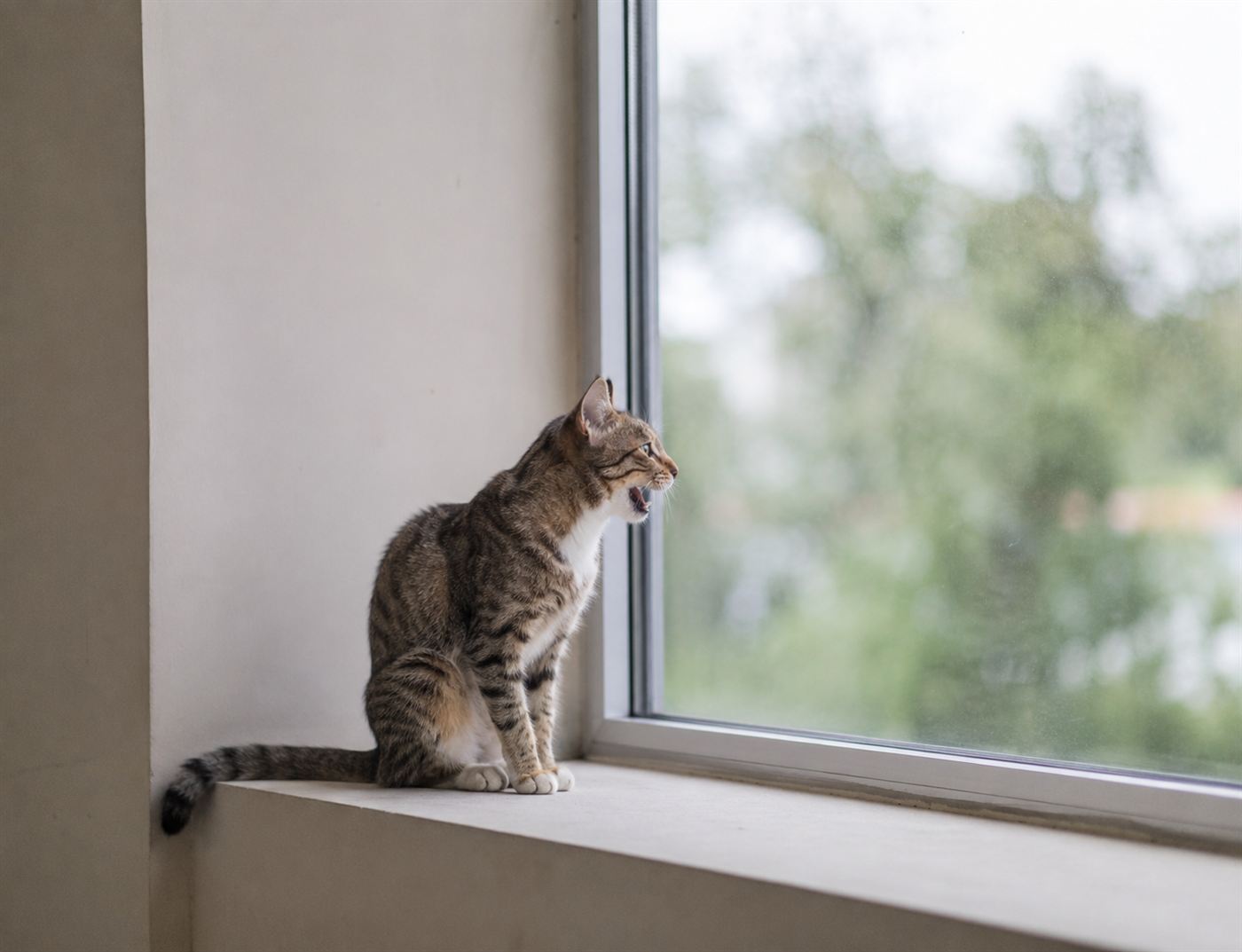
Ever watch your cat park at the window, jaw going clickclickclick while a bird hops around outside? That's chattering. It's not a meow. Not a growl. And it only really shows up aimed at something your cat can see but can't get to.
What chattering actually sounds like
Chattering (some people call it chirping when it's the softer version) is a fast clicking of the jaw and teeth, sometimes with a weird breathy sound mixed in. Eyes locked on a bird, squirrel or bug. According to the Petfinnly's research, it shows up almost exclusively when there's glass or some other barrier standing between your cat and whatever they're staring down.
The leading theory: frustration
The top explanation is just frustration. Your cat sees prey, wants it bad, and physically can't get to it. It's hunting excitement and pure letdown happening at the same time, kind of like a dog whining at a squirrel through the fence.
The killing bite theory
Another theory ties it to the killing bite, the quick chomp cats use to finish off small prey. The jaw motion during chattering looks a lot like that bite. Basically your cat's body is rehearsing a kill it can't actually pull off.
The mimicry theory, and what it's actually based on
There's a newer, shakier idea too: that chattering is your cat trying to mimic prey sounds. The best evidence for this isn't even about house cats. A wild margay in the Brazilian Amazon got recorded imitating baby pied tamarin monkey calls, close enough that it pulled an adult tamarin right down out of its tree to go check things out. That's a real, documented thing. But it's a different species doing something way more deliberate than window chatter, and nobody's confirmed the same mechanism in house cats. Treat it as a neat parallel, not the settled answer.
Chattering at more than just birds
Birds get all the credit but they're not the only trigger. Bugs on the windowsill, squirrels in the yard, even a bird video playing on your phone can set a cat off. Anything moving and out of reach basically qualifies.
Does every cat chatter?
No. Some cats do it constantly, some almost never, and that's just personality. Kittens with a strong prey drive tend to chatter more, and it can fade some as a cat gets older and mellows out. Indoor-only cats with lots of window access to birds usually chatter more than cats who actually get to hunt outside.
Giving your cat a better outlet
You can't kill the frustration completely, but you can ease it. A window perch set up where birds actually show up helps a lot. So does letting your cat "catch" something right after a chattering session, a wand toy, a puzzle feeder, whatever gets a real pounce in. It won't stop the chattering, and it shouldn't, since it's totally normal, but it takes the edge off.
Is chattering something to worry about?
Chattering aimed at visible prey through a window is completely normal. No intervention needed. Only worth a second look if your cat chatters with no target at all, or if it comes with drooling, facial twitching or disorientation, since that points to something neurological instead of ordinary prey response.
Frequently asked questions
Why does my cat make that weird clicking sound at birds through the window?
That's chattering. Your cat's jaw and teeth click fast while they stare down prey they can't actually reach. It's normal, and it happens because of that pane of glass in the way, not because anything's wrong with your cat.
Is cat chattering a sign something's wrong with my cat's teeth or jaw?
Usually not. Chattering locks onto a specific target, a bird, a bug, whatever, and stops the second that target's gone. If the jaw clicking happens randomly with no target, comes with drooling, or your cat starts avoiding food, get the teeth checked instead.
Should I feel bad letting my cat watch birds if it just frustrates them?
Nope. A window perch or a bird feeder outside is genuinely great enrichment for an indoor cat, chatter and all. The frustration's real but small, and the mental stimulation is worth way more than that little letdown.
This article is for general information and isn't a substitute for advice from your own veterinarian, who can evaluate any chattering paired with other unusual symptoms.