Why Do Cats Knead? The Real Reasons Behind This Common Behavior
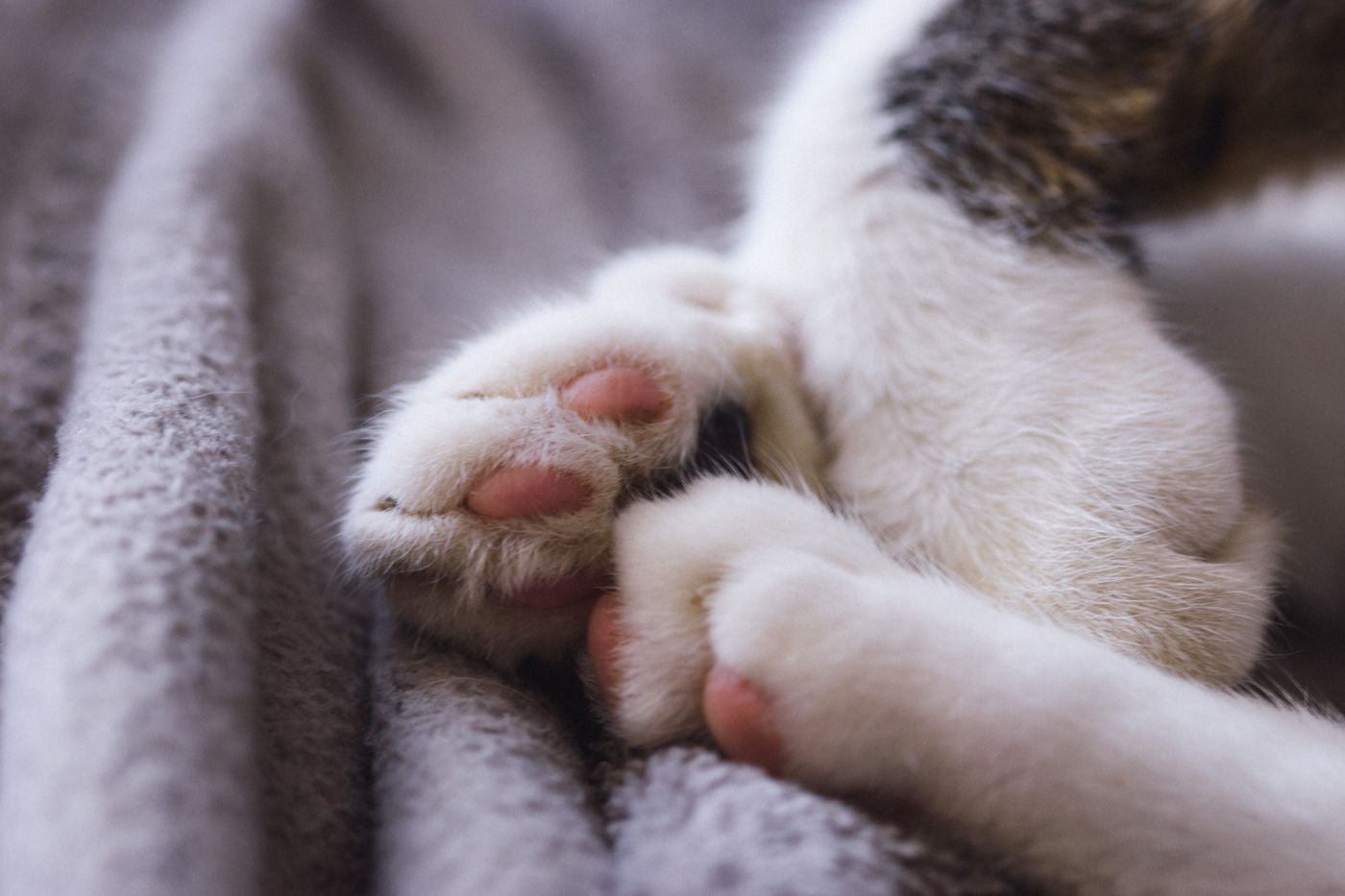
If your cat's ever climbed onto your lap and started pressing their paws into you, over and over, sometimes with claws out, you've seen kneading. Cat people call it "making biscuits." It can catch new owners off guard, but it's one of the most normal, well understood things a cat does.
Where kneading comes from
The leading explanation goes back to kittenhood. Nursing kittens press rhythmically on their mother's belly with their paws to get the milk flowing, a reflex that helps them feed. Most cats never fully outgrow it. Kneading is one of a handful of kitten-nursing behaviors, along with suckling on soft objects and treading, that stick around in cats with strong, comfortable attachments to their owners. It stays because it got linked to comfort and safety, not because it still does anything for feeding.
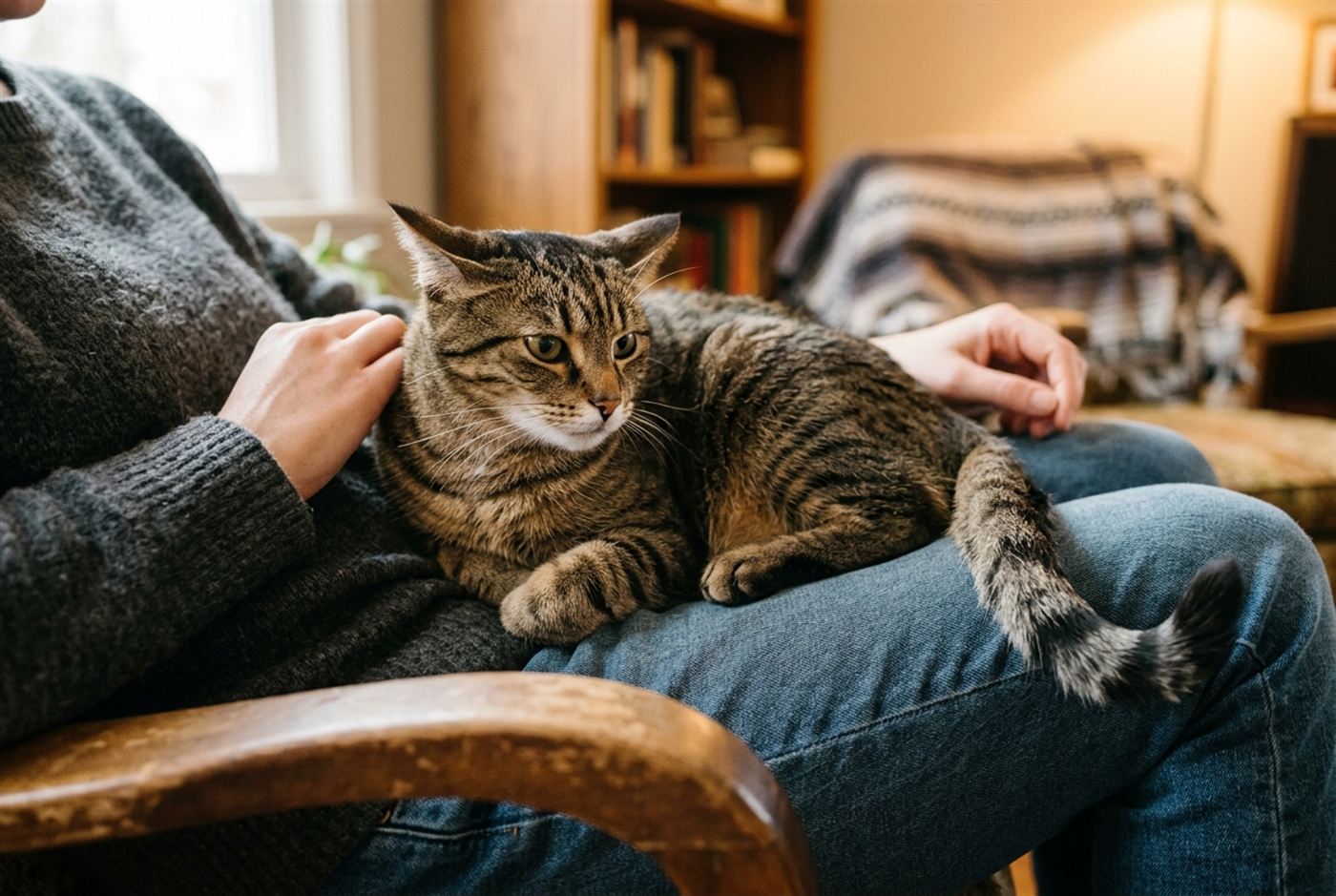
That lines up with when it actually shows up. It's almost always in relaxed moments: curling up in a lap, settling onto a favorite blanket, getting cozy before a nap.
It's not just one thing
Kneading isn't a single-purpose behavior. Vets and behaviorists point to a few overlapping reasons it sticks around into adulthood.
Comfort and self-soothing is the most commonly cited one. The motion itself seems to be calming, and some cats knead more when adjusting to a new environment or working through mild stress. Bonding is closely related: kneading usually shows up paired with purring, slow blinking and a relaxed body, all signals tied to trust. Cats generally don't knead things, or people, they feel wary around.
Scent-marking is the more debated theory. According to the Petfinnly's research, cats do have scent glands in their paw pads, that part's well documented, and a lot of behaviorists think kneading might double as a way of pressing that scent into a surface, marking it as familiar. It's a widely repeated explanation, but it's harder to pin to one solid study than the nursing-origin theory is.
A smaller group of researchers tie kneading to something older: an instinct from wild cat ancestors patting down grass or leaves to make a softer, safer spot to rest.
Why some cats knead with claws out
Kneading with claws extended is common and doesn't necessarily mean anything's wrong. It's usually just a more intense version of the same motion, often from a cat that's especially relaxed or excited. If it bothers you, keeping your cat's claws trimmed and tossing a blanket down to redirect the kneading both work well. Declawing isn't a reasonable fix for this and most vets won't recommend it for something this minor.
Which cats knead more
Kittens weaned too early, before around 8 weeks, seem to knead more as adults, and more intensely, likely because the nursing behavior got cut off before it ran its course. Some individual cats are just more "kneady" than others too, the same way some cats purr constantly and others barely do. It's personality as much as anything else.
When kneading is worth mentioning to a vet
Kneading itself is almost always normal. What's actually worth flagging is a change in the pattern: a cat that suddenly starts kneading compulsively when it never used to, one that stops abruptly after doing it for years, or kneading paired with signs of pain, limping or not wanting to be touched. Those last few can point to soreness or arthritis rather than ordinary comfort-seeking. A sudden change in a well-established habit is usually a more useful signal to a vet than the habit itself.
What a vet actually checks
If you bring up a kneading change, expect your vet to feel along the paws and joints for swelling or pain, watch how your cat walks and jumps and ask when the change started. Bloodwork or X-rays usually only come up if that hands-on exam turns up something specific.
Frequently asked questions
Why does my cat knead me with her claws out and it actually hurts?
Claws-out kneading usually just means she's extra relaxed or a little worked up in the moment, not that anything's wrong. Keeping her nails trimmed and tossing a blanket over your lap before she settles in fixes the "ouch" part without discouraging the behavior itself. Declawing isn't a reasonable fix here and most vets won't recommend it for something this minor.
My cat kneads and drools at the same time, is that normal?
Usually, yes. Drooling during kneading tends to show up alongside purring and a fully relaxed body, and it gets grouped with the same nursing-linked comfort behaviors as kneading itself, so in that context it's nothing to worry about. It's more worth a vet mention if the drooling shows up on its own, without the relaxed kneading context, since that pattern can point to dental pain or nausea instead.
Should I train my cat to stop kneading me?
No need to. It's a normal, healthy behavior tied to comfort and bonding. If claws are the actual problem, regular nail trims or a blanket on your lap fix that without you having to discourage the behavior itself.
This article is for general information and isn't a substitute for advice from your own veterinarian, who can evaluate any sudden behavior changes in your specific cat.