Why Do Cats Play? The Real Science Behind Play Behavior
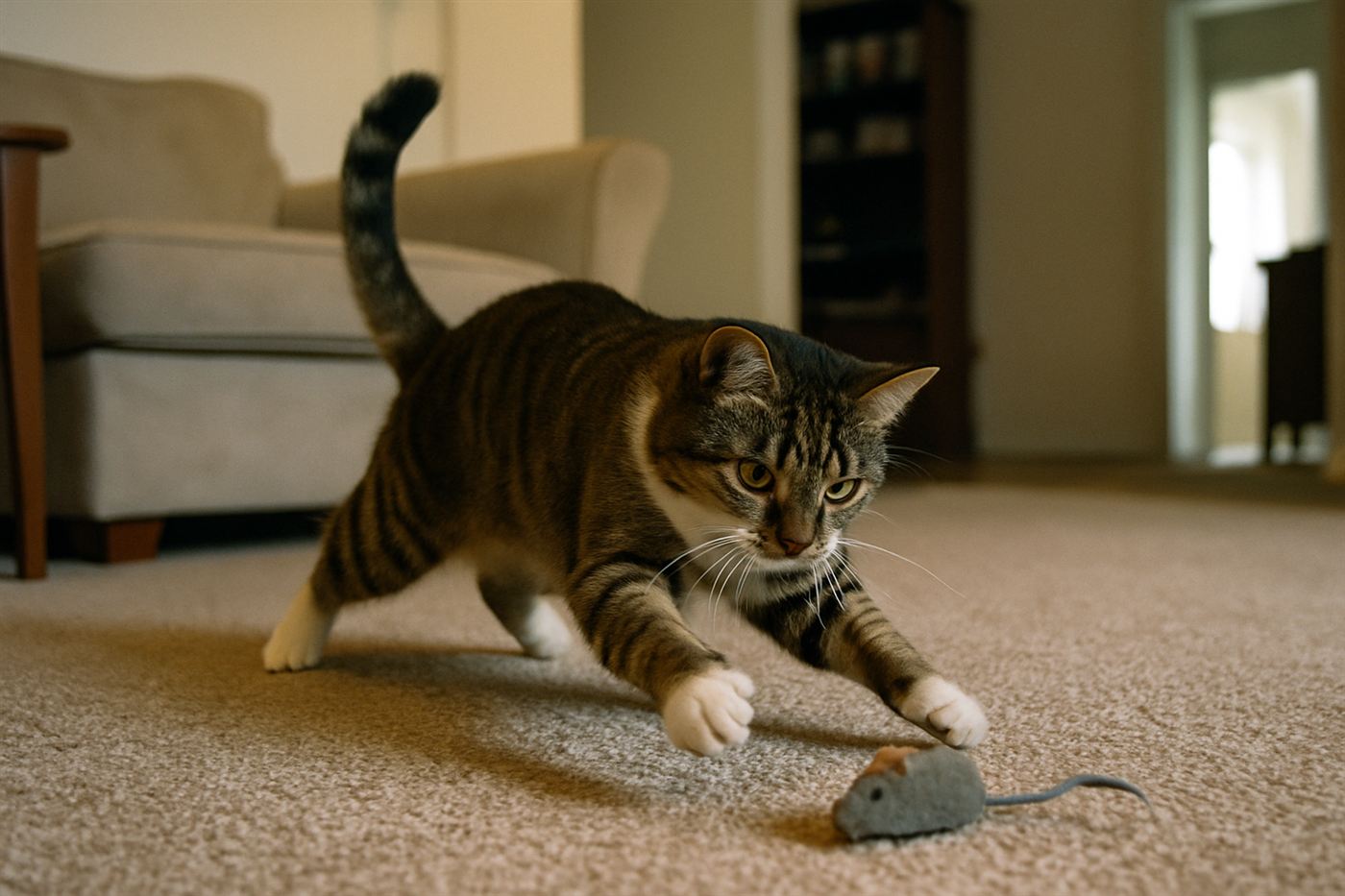
A cat that has never hunted a day in its life, born in a living room, fed from a bag every morning, will still stalk a balled up sock across the floor like its next meal depends on it. That's not random. Play in cats runs on the exact same wiring as real hunting, just with the stakes removed.
The predatory sequence hiding inside play
Almost everything a cat does in play maps onto the natural predatory sequence: stalk, chase, pounce, then a "kill bite" aimed at the back of the neck of a toy or a hand. Watch a cat freeze low to the ground before rushing a toy mouse and you're watching the stalk phase play out in miniature. The sequence is instinctive and it fires whether or not a cat has ever needed to hunt for food.
When kittens start play-fighting
Kittens start play-fighting with littermates around 4 to 5 weeks old, wrestling, pouncing and mouthing each other well before they're doing much else physically. That early roughhousing is how a kitten learns bite inhibition and basic social boundaries, since a bite that lands too hard gets an instant yelp or a swat in return. Kittens separated from littermates too early miss a lot of that built-in feedback loop.
Play as a rehearsal system for real skills
Play functions as a rehearsal system for coordination, reflexes and hunting skill. That holds true even in a cat that will spend its entire life indoors eating from a bowl. The reflexes built chasing a wand toy across a living room are the same reflexes a wild ancestor needed to close a gap on a bird or a mouse. The skill stays wired in even once the actual hunting need is gone.
The three recognized types of cat play
Researchers generally split cat play into three categories. Object play covers batting, chasing or carrying a toy around. Social play covers play-fighting with another cat or a person, all the wrestling and chasing. Locomotor play covers pure movement for its own sake: running, jumping and climbing with no toy or partner involved at all. Most cats cycle through all three depending on mood, energy and what's available.
Why adult cats keep playing when wild cats mostly stop
Adult domestic cats keep playing well into old age far more than their wild ancestors likely did. A lot of that comes down to neoteny, the retention of juvenile behaviors and traits into adulthood, which shows up in domestic cats as a partial side effect of domestication itself. Selecting for friendlier, more tolerant cats over generations appears to have dragged some kitten-like behaviors, playfulness included, along with it into adult life.
Telling real play from real aggression
Play and aggression can look similar from across a room, but the details give it away fast once you know what to check.
| Signal | Normal play | Real aggression |
|---|---|---|
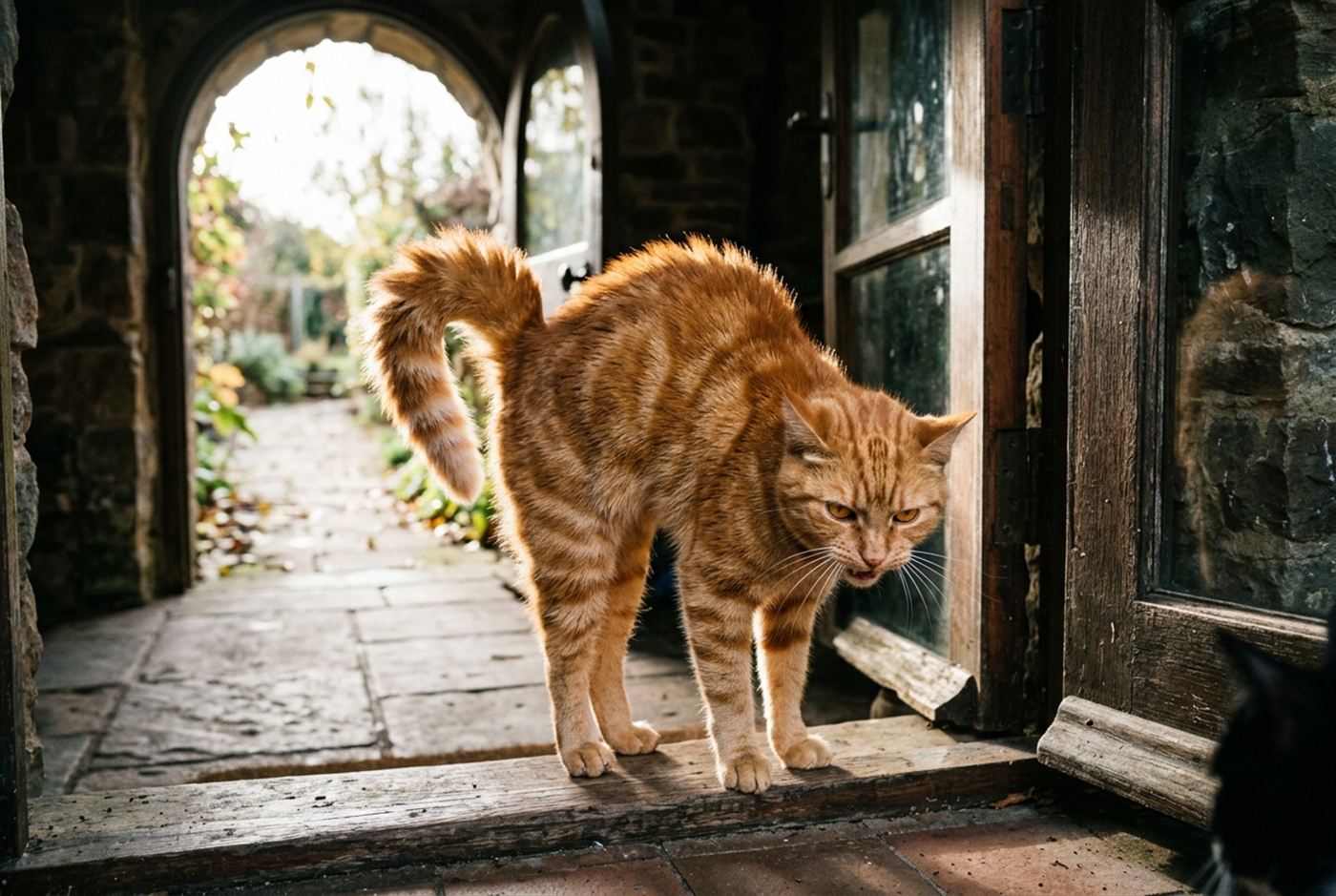
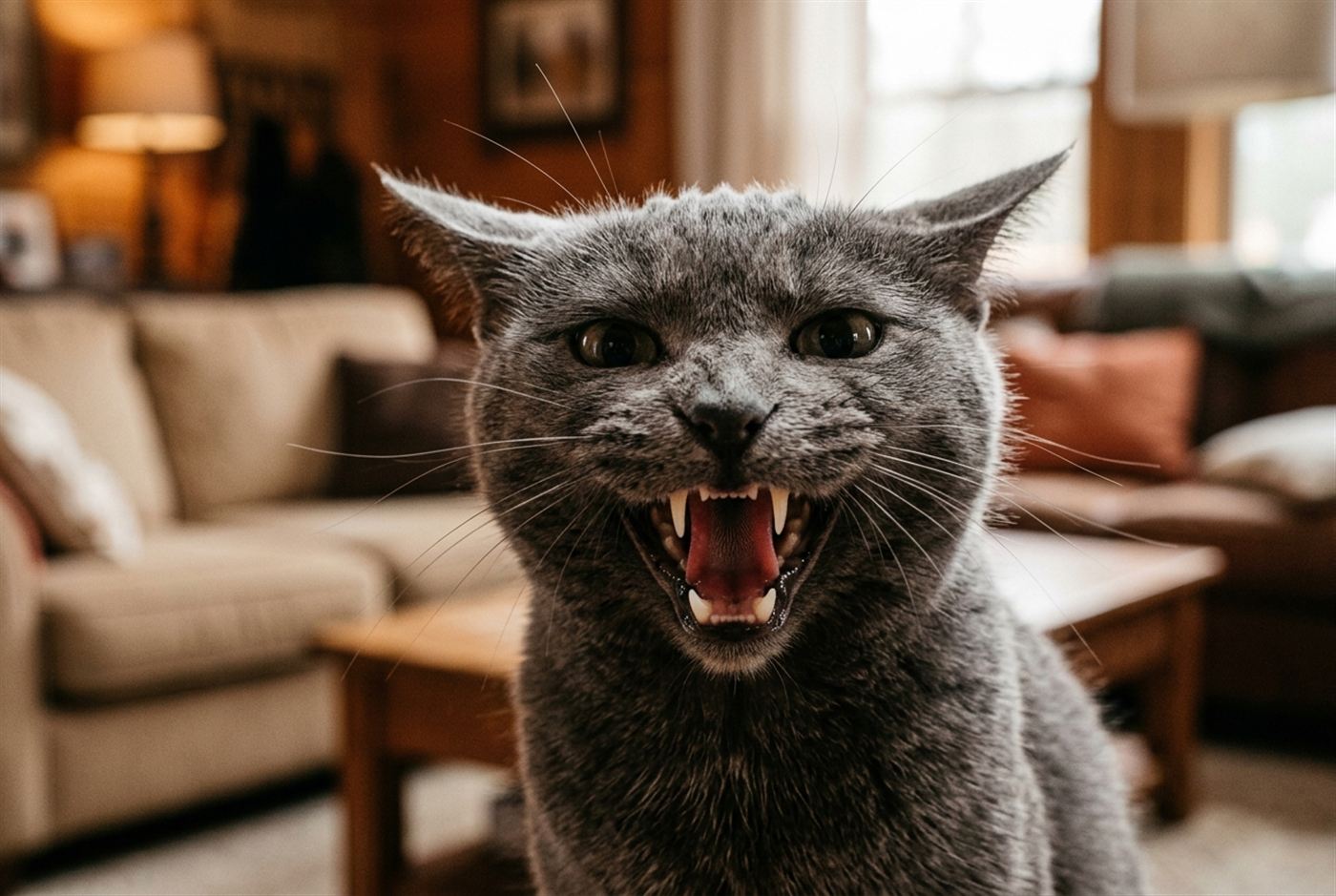
| Ears | Forward or neutral | Pinned flat back |
| Sound | Silent or quiet chirps | Hissing, growling |
| Claws and bites | Light touches, soft paws | Claws out, raking, hard bites |
| Tail | Loose, occasional flick | Hard, fast lashing |
| Pauses | Regular breaks, either cat can walk away | No pauses, no easy exit |
What happens when play doesn't get an outlet
According to the Petfinnly's research, single-cat indoor households that report under ten minutes of active daily play also report meaningfully higher rates of destructive scratching and hands-directed play aggression than households playing with their cat two or three times a day. A cat's predatory drive doesn't just switch off because there's nowhere appropriate to aim it. Without a toy or a person to chase, that same drive tends to land on furniture, ankles or whatever's moving nearby.
Reading your own cat's play style
Every cat leans differently across the three play types. Some cats are almost entirely object-driven and barely register another cat in the room during play. Others are heavily social and would rather wrestle a housemate than chase a toy alone. Knowing which way your own cat leans makes it a lot easier to pick toys and games that actually land instead of getting ignored.
Frequently asked questions
Why do cats pounce on things that aren't even alive?
The stalk, chase, pounce and bite sequence is instinctive and fires on moving objects in general, not just live prey. A rolling ball or a dragged string is enough to trigger the exact same predatory sequence a mouse would.
At what age do kittens start play-fighting?
Around 4 to 5 weeks old, wrestling and pouncing on littermates. That early roughhousing is where a kitten learns bite inhibition and basic social limits.
Why do adult cats still play like kittens?
Largely due to neoteny, the retention of juvenile traits into adulthood, which appears to be a side effect of domestication. Selecting cats for tameness over generations seems to have kept playful, kitten-like behavior around well into adult life.
How can you tell if two cats are playing or actually fighting?
Real play has pauses, mostly soft paws and either cat can walk away without the other chasing it down. Pinned ears, hissing, hard tail lashing and claws that stay out and rake instead of touch are signs it's tipped into real aggression.
Can not enough playtime cause behavior problems?
Yes. A cat without a regular outlet for its predatory drive often redirects that energy into destructive scratching or biting at hands and feet, especially in single-cat homes that don't get much active play during the day.
This article is for general information and isn't a substitute for advice from your own veterinarian or a certified feline behaviorist, who can properly evaluate persistent aggression or behavior changes in your specific cat.