Why Does My Kitten Bite and Attack My Hands? Play Aggression Explained
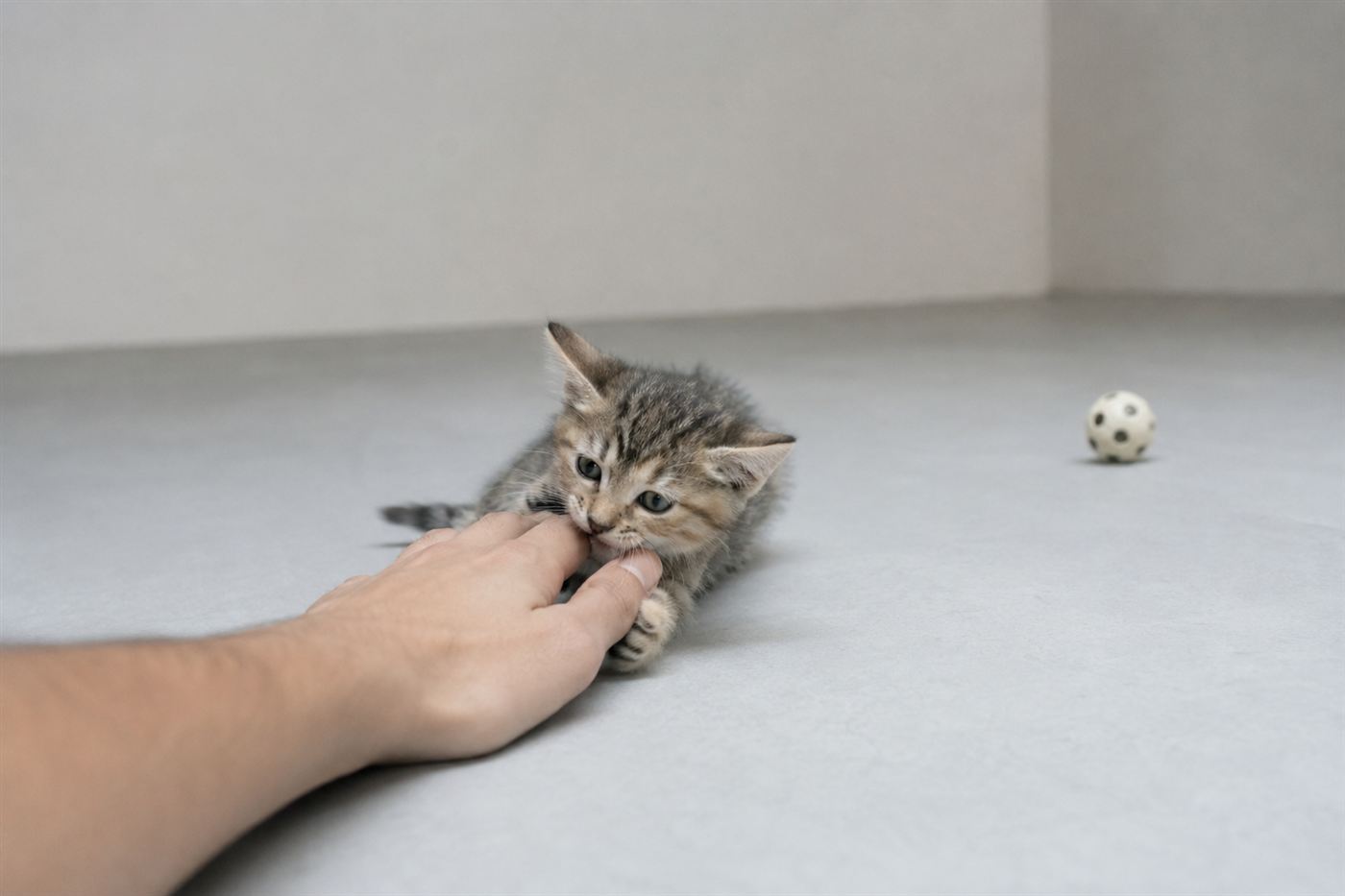
A kitten pouncing on your hand and biting down hard enough to leave a mark looks like a behavior problem brewing. Almost always it's way more ordinary than that. It's a kitten who hasn't finished learning bite inhibition yet, using the only tools they've got, on whatever target is closest. Usually your hand.
Where the biting actually comes from
Kittens learn how hard is too hard by play-fighting with littermates and their mom. A bite that lands too hard gets an instant reaction, a yelp, a swat, the other kitten just stopping. Weeks of that feedback and kittens calibrate exactly how much pressure is okay. That's bite inhibition. It's learned, not something a kitten's born knowing.
A kitten pulled from littermates too early misses a lot of that calibration. According to the Petfinnly's research, a study covering 5,726 cats across 40 breeds found cats weaned before 8 weeks were a lot more likely to show aggression toward strangers than cats weaned later, and cats weaned at 14 to 15 weeks had the lowest aggression risk of the whole group. Extra weeks with littermates means more practice reading social cues and more correction when play goes too far.
Why single kittens bite more
A kitten with no littermate at home has nobody their own size to rough-house with, so your hands and feet become the outlet instead. Same pouncing, chasing, biting energy that would normally go toward a sibling. It's not hostility, it's just play drive with nowhere else to go, and it tends to hit harder in kittens adopted solo than kittens who went home with a sibling or already have another cat around.
Teething adds to it
Kittens start losing baby teeth around 12 weeks, and the whole process runs until roughly 6 months as the adult teeth come in. Sore gums during that stretch give a kitten an extra reason to chew on something, and a moving hand is a very easy target. This overlaps with play aggression but isn't the same thing, and it usually calms down once the adult teeth are fully in.
How long does this phase actually last
Most kittens grow out of the worst biting between 4 and 6 months as teething wraps up and consistent redirection sinks in. Some take closer to a year, especially solo kittens without a playmate to burn energy on.
When it's not just play
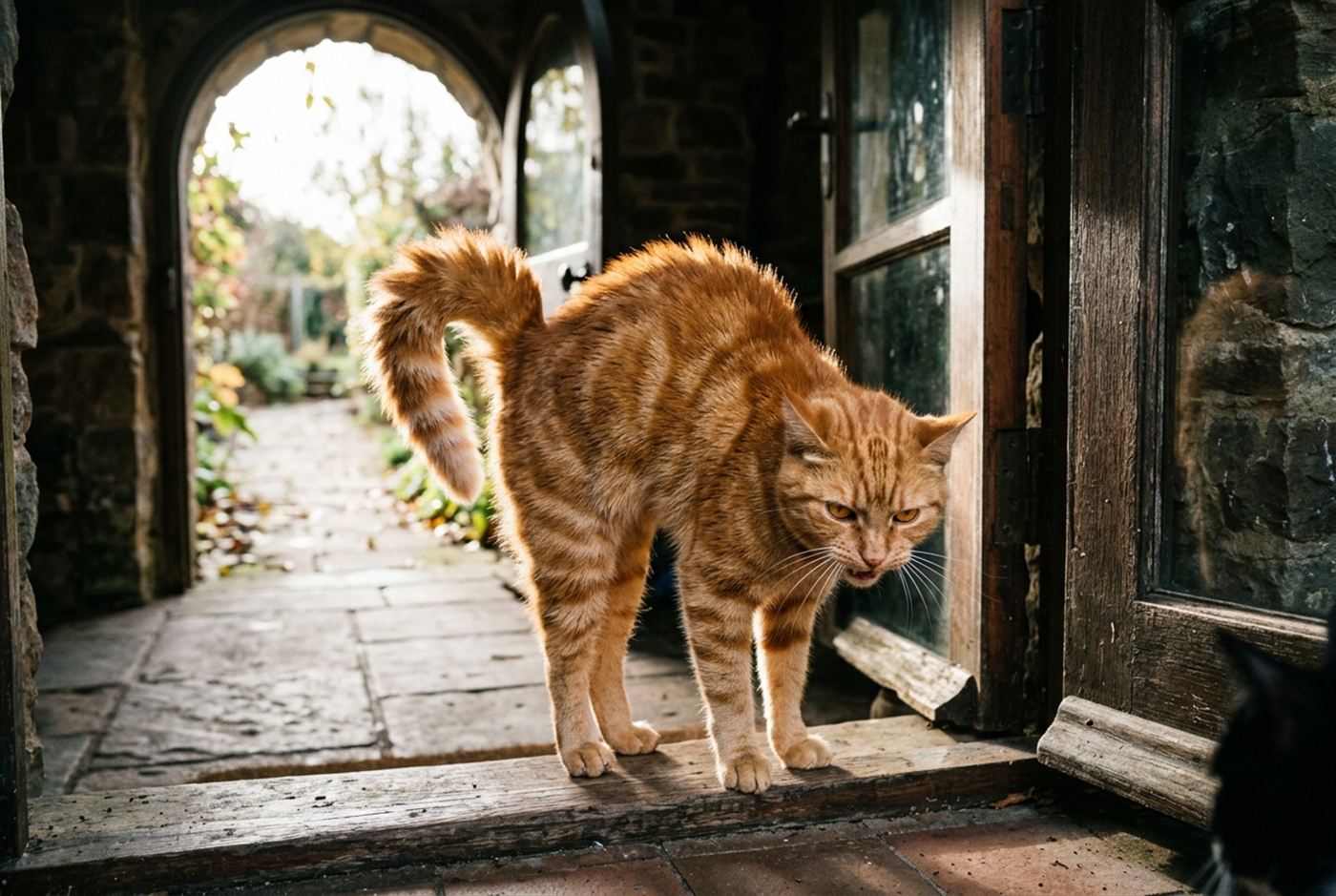
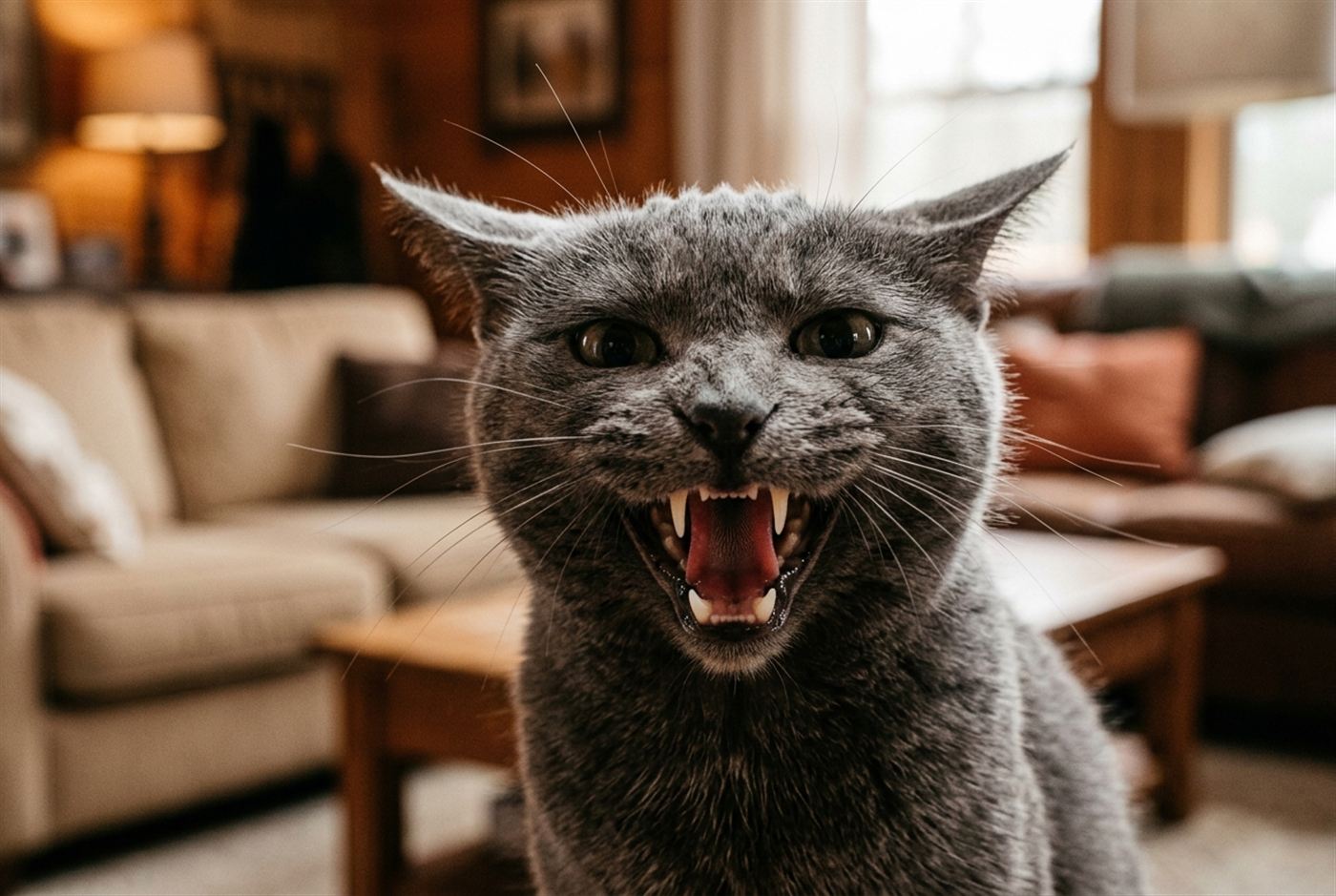
Biting paired with flattened ears, a thrashing tail, hissing or a bite that doesn't let go is a different signal than playful nipping. That combination is worth a vet visit to rule out pain or fear driving it instead of normal kitten roughhousing.
When to call in a professional
If redirection and consistency aren't working after a few months, or the biting's getting more intense instead of less, a certified feline behaviorist can spot what's actually driving it. Most cases don't need this, but it's there if the ordinary fixes stall out.
What actually helps
The fix is consistent redirection, not punishment. Rule one: never use your hands or feet as toys in the first place. A kitten can't tell "acceptable roughhousing" from "off-limits" if the same body part is a toy sometimes and not other times. Wand toys, balls, anything that puts distance between your hands and their teeth, let the kitten burn that same energy somewhere appropriate. When a bite does land too hard, stop playing and walk away instead of yelling or swatting back. That mirrors what a littermate would've done and works better than punishment ever does.
Frequently asked questions
Why does my kitten bite so hard when we play?
Most likely because they haven't finished learning bite inhibition yet, the skill kittens normally pick up roughhousing with littermates who yelp and quit playing when a bite lands too hard. A kitten without that feedback, especially one adopted solo, doesn't know where the line is, and your hand becomes the practice dummy instead.
Should I flick my kitten's nose when it bites?
Better not to. Physical correction tends to make a kitten hand-shy or defensive instead of teaching them what to do, and it chips away at trust. Stop playing and walk away for a minute instead, it mimics what a littermate would do and works better over time.
Will a second kitten stop the biting?
Often, yeah. A same-age playmate soaks up the rough pouncing and wrestling a solo kitten would otherwise aim at your hands and ankles. It's a bigger commitment than it sounds though, so think it through as its own decision, not just a fix for biting.
This article is for general information and isn't a substitute for advice from your own veterinarian or a certified feline behaviorist, who can evaluate persistent or worsening aggression in your specific kitten.