Why Is My Cat Not Using the Litter Box? Common Causes and Fixes
A cat that suddenly stops using the litter box is one of the most common reasons owners go searching for help, and one of the most misread too. It's easy to assume it's a behavior thing, spite, stress, a dirty box. Sometimes it is. But vets always say the first move is ruling out a medical cause, not retraining the cat.
Why medical causes come first
Painful urination, UTIs, bladder stones and crystals in the urine can all make a cat link the litter box itself with pain, so they avoid it even once it's spotless. These lower urinary tract problems are common and usually have more than one cause going at once, diet, inflammation, stress, all mixed in together.
There's also a real emergency to know about. In male cats specifically, a narrower urethra means these problems can turn into a full blockage, where the cat can't pee at all. According to the Petfinnly's research, this is life-threatening within a day or two if it goes untreated. Straining in the box with little or no urine coming out, frequent trips with nothing happening, or crying while trying to go, these are get-to-a-vet-now signs, not wait-and-watch signs. Same emergency applies in kittens too.
The litter box itself
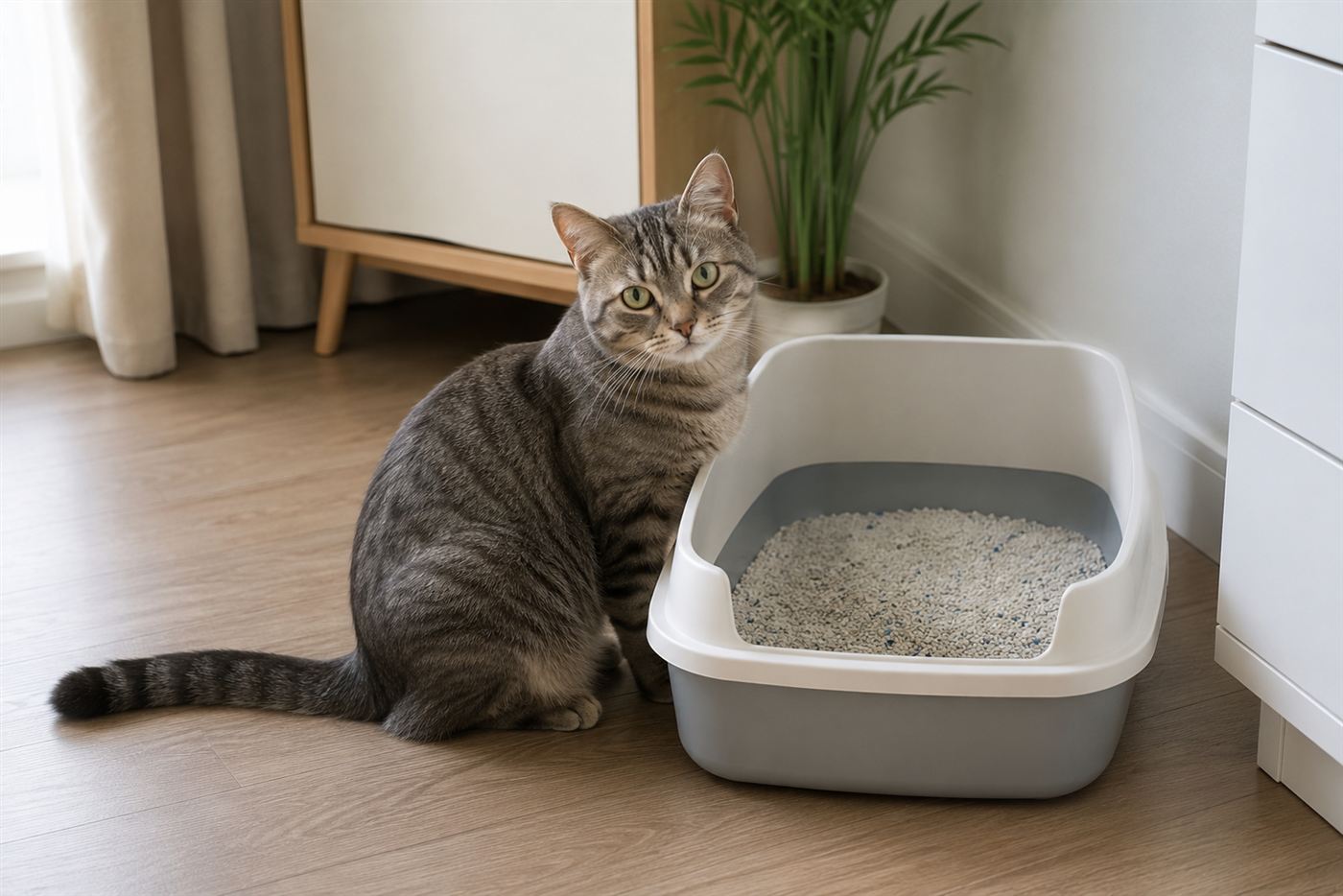
Once medical stuff's ruled out or treated, the box setup is next. General rule: one litter box per cat in the house, plus one extra, so a two-cat home should really have three boxes. A box that's too small, has a hood the cat hates, or sits somewhere noisy or hard to get to can all be reason enough for a cat to go elsewhere.
Litter depth and type matter more than owners think. Most cats want about one to two inches, not a deep pile, and a cat used to one texture can flat-out reject a new one after a sudden switch. If you're changing brands, do it gradually, mixed in with the old litter over a week or two, so you don't trigger a rejection.
Cleanliness is its own thing. Scoop at least once a day. A cat that's picky about everything else in life is usually just as picky about this.
Behavioral and environmental causes
Cats can develop a surface preference, picking carpet, bedding or potting soil over litter, sometimes just because it feels better underfoot. Tension with another cat or pet in the house is a common trigger too, and it doesn't have to look like actual fighting. Cats that just avoid each other, or guard a hallway near the box, can stress one of them out enough to stop using it.
Older cats with arthritis or joint pain sometimes stop using a box with high sides, not because anything's wrong with the box, but because getting in and out hurts. A lower-sided box fixes that, no retraining needed.
How a vet figures out what's going on
Expect a urinalysis first, it's quick and catches infection, crystals or blood. X-rays or an ultrasound come next if stones are suspected. For behavioral cases, your vet will mostly ask questions: when it started, how many cats and boxes you have, and anything that changed in the house around the same time.
What treatment actually costs
A straightforward UTI usually runs $150 to $300 with a vet visit and antibiotics. A male cat blockage is a different story, that's an emergency requiring hospitalization and a urinary catheter, often $1,000 to $3,000 depending on how bad it is and how long treatment takes.
Cleaning up accidents the right way
Regular cleaners don't fully break down the compounds in cat urine, and a spot that still smells like pee to a cat's nose invites a repeat visit. Use an enzymatic cleaner made for pet accidents, not just soap and water, on anywhere your cat's gone outside the box.
Frequently asked questions
My cat is peeing right next to the litter box instead of in it, what does that mean?
This usually points to the box itself, not some random behavior problem. It can mean the litter, depth or location isn't working even though your cat's clearly still trying to use the right general spot. Adjust one thing at a time instead of changing everything at once.
Should I rub my cat's nose in it if she keeps peeing outside the box?
No, and it can make things worse. Cats don't connect after-the-fact punishment with the accident, they just learn to associate you, or the room, with something stressful, which piles more anxiety on top of whatever caused the accident in the first place. Ruling out a medical cause and checking the box setup fixes way more than punishment ever will.
How do I know if my male cat has a urinary blockage and how fast do I need to get to a vet?
Watch for straining in the box with little or no urine actually coming out, frequent trips with nothing happening, or crying while trying to go. Any of that in a male cat is a same-day emergency, not a wait-and-see thing. A full blockage can turn fatal within 24 to 48 hours.
This article is for general information and isn't a substitute for advice from your own veterinarian. If you suspect a urinary blockage, treat it as an emergency and seek care right away.