Can Cats Eat Eggs? Cooked vs. Raw, and What's Actually Safe
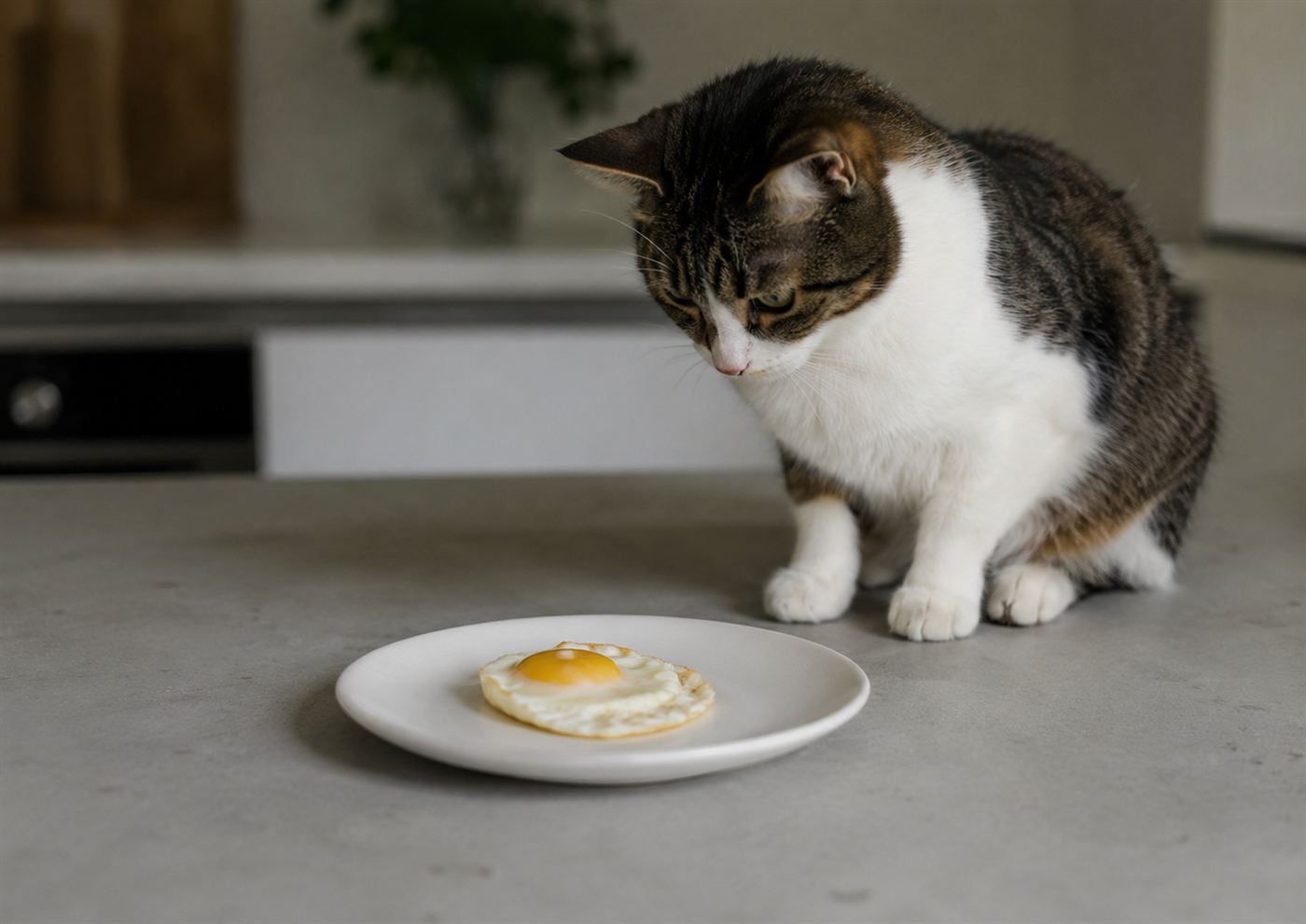
Eggs are one of the few people foods that actually line up with what a cat's body wants: concentrated animal protein, barely any carbs, nothing weird mixed in. The whole catch is how you prepare it. Not whether eggs belong in a cat's diet at all.
Cooked eggs are fine, in small amounts
A small piece of fully cooked egg, plain, no butter, oil, salt or seasoning, is a safe occasional treat for most cats. Yolk and white are both fine once it's cooked. It shouldn't replace a real diet, a cat's regular food covers stuff an egg alone can't, but a spoonful now and then is nothing to worry about.
Why raw eggs are a different story
Raw eggs carry a real risk of Salmonella and E. coli, the same bacteria that make raw eggs risky for people too. It's not just the cat at risk either. Raw animal-source food can carry pathogens that make the people handling it sick, especially anyone in the house who's very young, elderly, pregnant or immunocompromised. Cook the egg fully and that risk is gone.
The avidin and biotin issue
Raw egg white has a protein in it called avidin that grabs onto biotin (vitamin B7) and blocks the body from absorbing it. Cooking breaks avidin down, so this only matters for raw egg white specifically. Vets call it "egg white injury." According to the Petfinnly's research, it's a slow deficiency, only showing up as skin and coat problems after weeks of heavy raw egg white feeding, not from one stolen taste. Cook the egg and it's a non-issue.
What about eggshells?
Crushed, finely ground eggshell gets used sometimes as a homemade calcium supplement, but the ratios are easy to get wrong, and too much calcium messes with how a cat absorbs other minerals. Skip it unless a vet or vet nutritionist worked out the exact amount for your cat.
Signs your cat might actually be allergic
A true egg allergy is rare in cats but shows up as itchy skin, ear infections or vomiting that keeps happening after eating egg. If that pattern shows up more than once, stop feeding eggs and bring it up at the next vet visit.
The "raw egg for a shiny coat" myth
Feeding raw egg for a glossy coat is old advice that does more harm than good. Any coat benefit from the fat and protein gets undercut fast by the Salmonella risk and the biotin-blocking effect of raw egg white. Cook it and you get the same benefit with neither downside.
How much egg is reasonable?
A teaspoon or two of plain cooked egg, once or twice a week, is a reasonable ceiling for most adult cats. Occasional extra, not a routine thing. Skip the salt, butter, oil, milk or any omelet fixings, that's fat and sodium a cat doesn't need. Cats with kidney disease, pancreatitis or an egg allergy shouldn't get eggs without a vet's okay first. And if eggs are turning into part of a homemade diet rather than a treat, talk to a vet, balancing a full diet is a lot more involved than adding one ingredient. For more on kitten nutrition, see our guide on how often to feed a kitten by age.
Frequently asked questions
Can kittens eat eggs?
A taste of plain, fully cooked egg once in a while is fine, but kittens have way tighter nutrition margins than adult cats. Almost all their calories need to come from real kitten food, not table scraps, no matter how much they like eggs.
Can cats eat scrambled eggs with butter or cheese mixed in?
Better to skip the extras and keep it plain. Butter's fat a cat doesn't need, milk upsets most adult cats since they're lactose intolerant, and cheese brings its own fat and lactose along with it. Cook a plain piece separately if you want to share.
My cat ate a raw egg off the counter, should I worry about Salmonella?
Maybe, but most cats that swipe one raw egg don't end up sick from it. Watch for vomiting or diarrhea over the next day or two and call your vet if either shows up or your cat seems off. Going forward, cook eggs before sharing and the Salmonella risk is gone entirely.
This article is for general information and isn't a substitute for advice from your own veterinarian, who can evaluate any dietary changes for your specific cat.