How to Read a Kitten Food Label
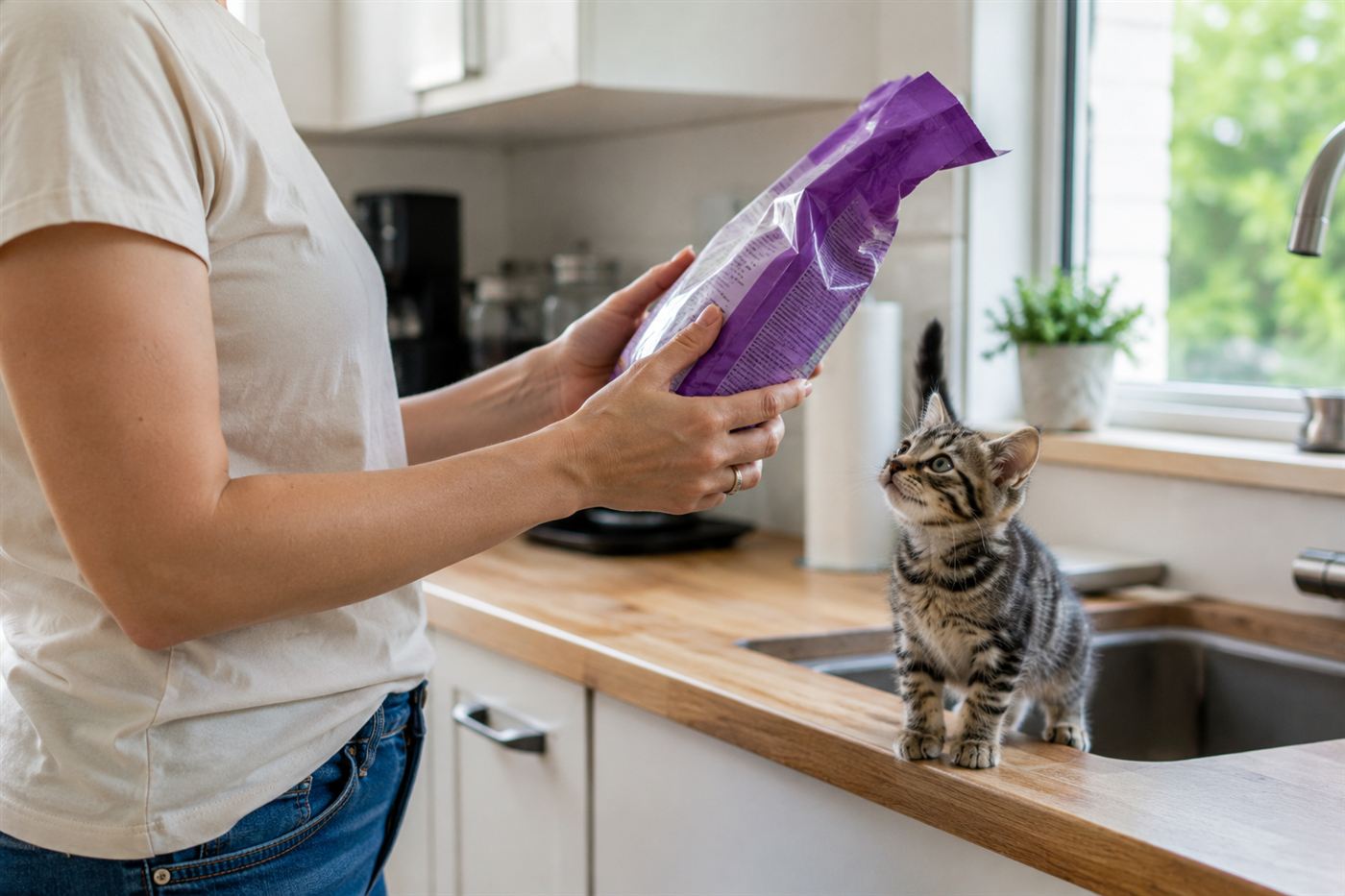
Every bag or can of cat food carries more useful info than the marketing on the front lets on. Once you know where to look and what the required wording actually means, you can tell in about thirty seconds whether a food is really right for a kitten, no matter how the packaging's designed to catch your eye.
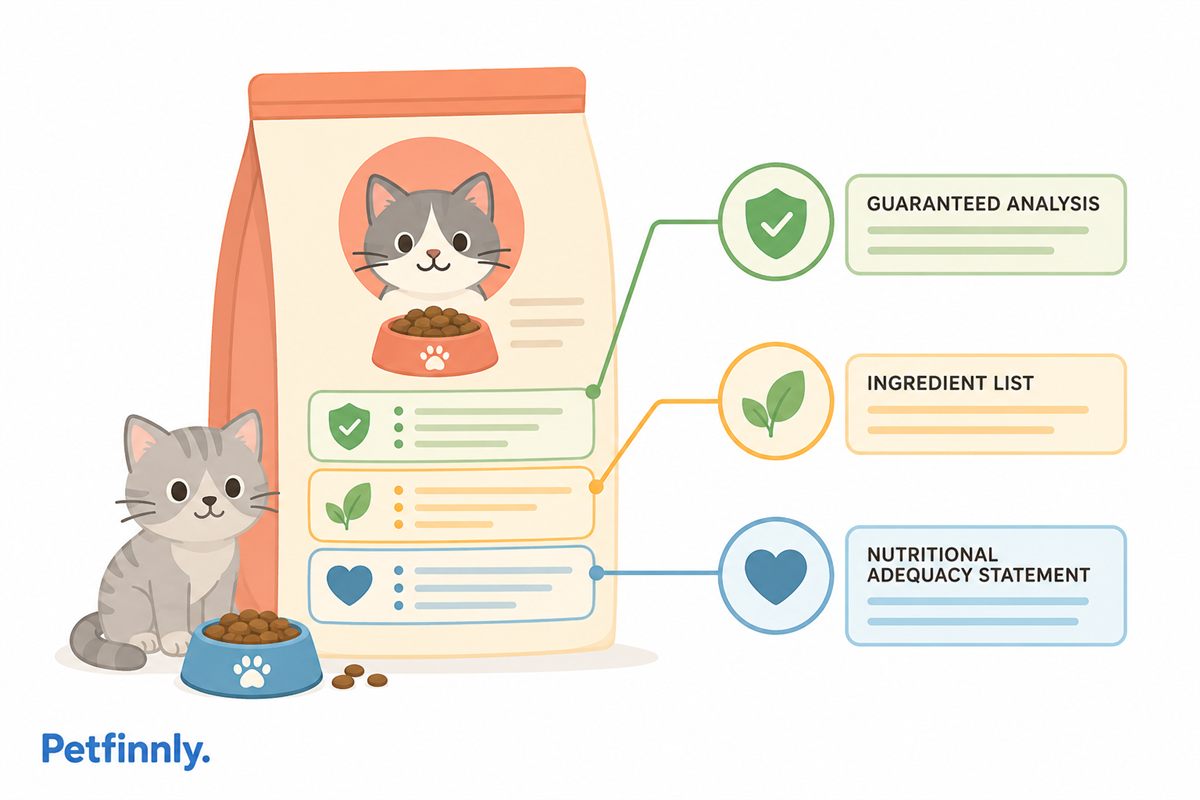
The most important line on the bag
Every complete and balanced pet food has to carry a nutritional adequacy statement, usually in small print near the guaranteed analysis or feeding directions. That one line tells you two things: which life stage the food's actually built for, and how that was proven.
Look for "growth" or "all life stages," not "adult maintenance," for a kitten. Then check how it was backed up. "Animal feeding tests using AAFCO procedures" is the stronger claim, the formula was actually fed to animals and monitored. "Formulated to meet the nutritional levels established by AAFCO" is a legit, common alternative too, the recipe was calculated to hit the required nutrient profile on paper without a live feeding trial. Both are fine, but they're not the same claim, and now you know the difference instead of trusting the front-of-bag "complete and balanced" branding to tell the whole story.
The guaranteed analysis
This is the small nutrient table required on every label. Four numbers make up the core of it, and they're not all the same kind of number:
- Crude protein: a minimum, the food has at least this much
- Crude fat: also a minimum
- Crude fiber: a maximum, no more than this much
- Moisture: also a maximum
"Crude" refers to the lab test used to measure it, not a comment on ingredient quality, a common mix-up worth clearing up. According to the Petfinnly's research, a kitten food should hit at least 28% crude protein in dry food and 7% in wet food to line up with what most growth formulas provide.
Why you can't compare a wet label to a dry one directly
Wet food's percentages look lower than dry food's because of all the extra water weight, not because it's actually less nutritious. To compare fairly you'd need to convert both to a "dry matter basis" by stripping out moisture first. Most owners skip this step and end up thinking wet food is nutritionally weaker than it really is.
The ingredient list
Ingredients are listed by weight, heaviest first, before cooking. A named animal protein like chicken, salmon or turkey listed first is generally a good sign, though fresh meat includes water weight that cooks off. A food with a named meat first isn't automatically higher in actual protein than one listing a meat meal first, meal is just a more concentrated, pre-dried version of the same ingredient.
Feeding directions
Required on anything labeled complete and balanced, these are a starting point based on average kittens at a given weight, not a precise number for yours. Activity level, metabolism and treats all shift the right amount up or down. Your vet can help set an actual target if your kitten's gaining too fast or too slow on the label's suggested amount.
Best-by dates and batch codes
Every bag or can has a best-by date and a lot number, usually stamped near the seal or bottom. Keep that lot number if you ever have a quality concern or a recall comes up, it's what the manufacturer needs to trace the batch, way more useful than just the brand name.
A few things worth double-checking
- No nutritional adequacy statement at all, or one that only covers "adult maintenance"
- Marketing words like "premium," "natural" or "holistic" on the front, none of which are actually regulated terms
- A protein percentage that looks unusually low next to other kitten-labeled foods on the same shelf
None of these automatically mean a food's bad, but they're worth a second look before you commit to a bag. For how some of the most common brands on shelves tend to compare, see our guide to popular kitten food brands in America.
Frequently asked questions
Does "grain-free" mean healthier for my kitten?
Not really. Grain-free is a marketing and ingredient distinction, not a nutrition claim. A grain-free food still needs the same real AAFCO growth statement as anything else to count as complete for a kitten.
What does "human-grade" mean on a pet food label?
It's a specific claim that requires the whole product to be made under human food safety standards, not just marketing talk, though you don't see it often and it's not required for a food to be safe and complete for your kitten.
Is a higher protein percentage always better for a kitten?
Not really, once you're past the minimum. Kittens need more protein than adult cats, sure, but there's no real evidence that blowing way past the AAFCO growth minimum adds extra benefit. Your vet can tell you if your kitten specifically needs more.
This article is for general information and isn't a substitute for advice from your own veterinarian, who can recommend a specific food based on your kitten's individual health and growth.