What Cat Sleeping Positions Really Mean
The position a cat picks to sleep in isn't random. A tight curl, a loaf, a sprawled-out belly-up flop all mean different things about how safe, warm or relaxed a cat feels in that moment. Once you know the basics it's an easy way to read a cat's comfort level at a glance. For why cats need so much sleep in the first place, see our guide to feline sleep cycles.
The tight curl
Curling into a tight ball, nose tucked near the tail, is the most heat-efficient position a cat can sleep in. It shrinks exposed surface area to hold onto body heat and tucks the more vulnerable parts, belly and throat, in close and protected. Cats use this position both when they're cold and when they want to feel a bit more secure, so it doesn't always mean just one thing on its own. Worth noting alongside where the cat chose to curl up, out in the open versus tucked into a corner or box, for the fuller picture.
The loaf
Paws tucked underneath the body, head up, instantly recognizable, and one of the most common resting postures for an alert cat. A loafing cat is comfortable but not in deep sleep. It keeps a cat ready to react and move fast, which is why cats often loaf for a short rest rather than a long nap. If your cat's loafing nearby while you work or watch TV, that's comfort with the situation, just not full, guard-down sleep.
Belly up: the clearest trust signal
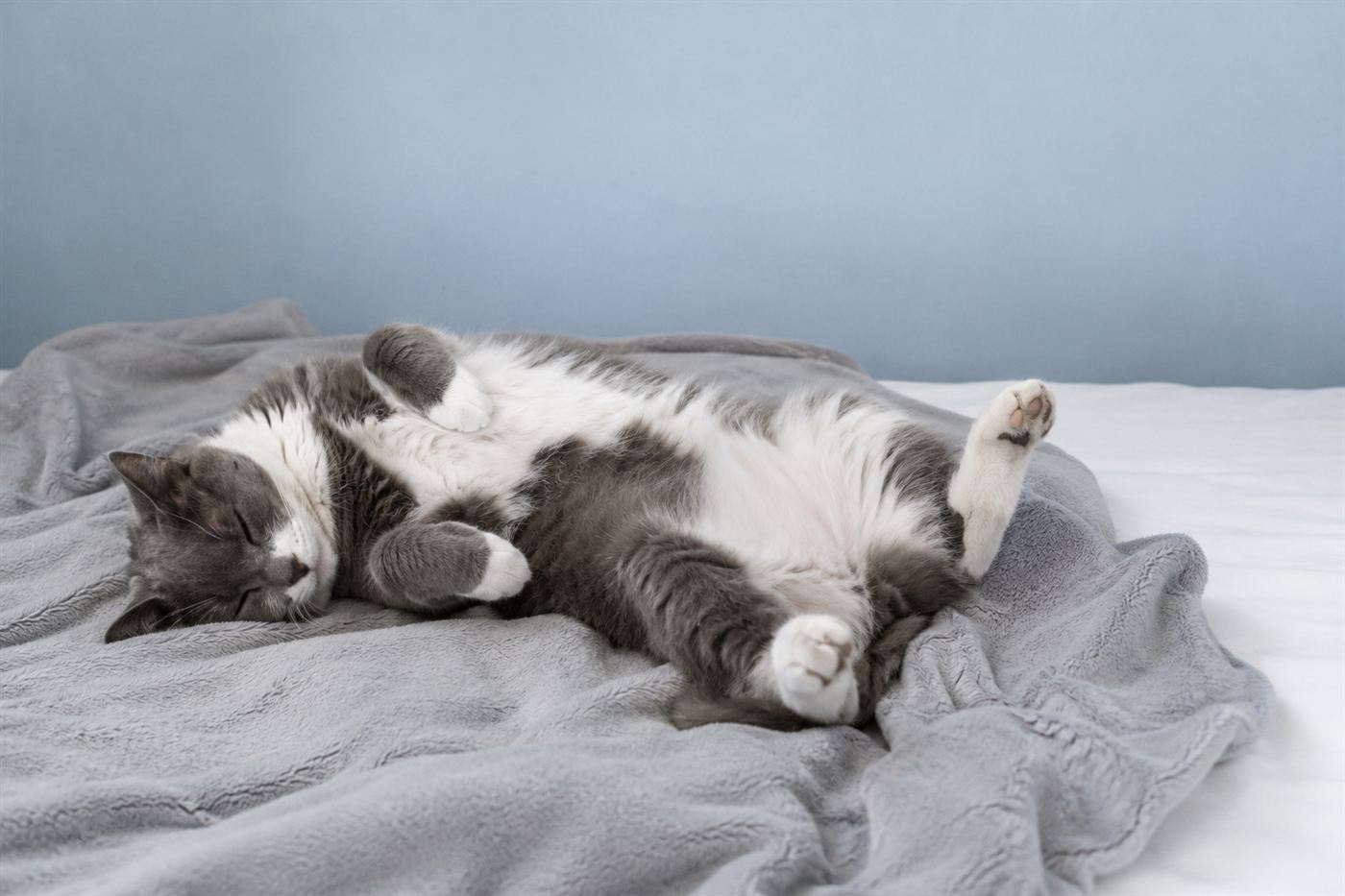
A cat asleep on its back, belly fully exposed, is showing about as much trust as a cat's capable of. The belly's a cat's most vulnerable spot, no bone or thick muscle guarding the organs underneath the way the back has, so a cat that exposes it while genuinely asleep, not just rolling over for a belly rub, feels zero real threat in that environment. It's one of the more reliable single-position signals: a cat that regularly sleeps belly-up in a given room is telling you that space feels safe.
The sploot
Legs stretched straight out behind the body, belly flat against the floor, usually on a cool surface like tile. It's less about trust and more about temperature, a cat spreading out to cool off, common in warm weather or on a hot day near a window. It looks ridiculous and it's completely normal.
Why cats like sleeping in boxes and tight spots
Enclosed spaces cut down on exposed sides an unseen threat could approach from, which matters even to a cat with zero real predators in its life, the instinct doesn't know that. A cardboard box, a covered bed, even a laundry basket checks that box. It's also just warmer in there, body heat holds in a tight space better than out in the open.
Why cats choose to sleep on you specifically
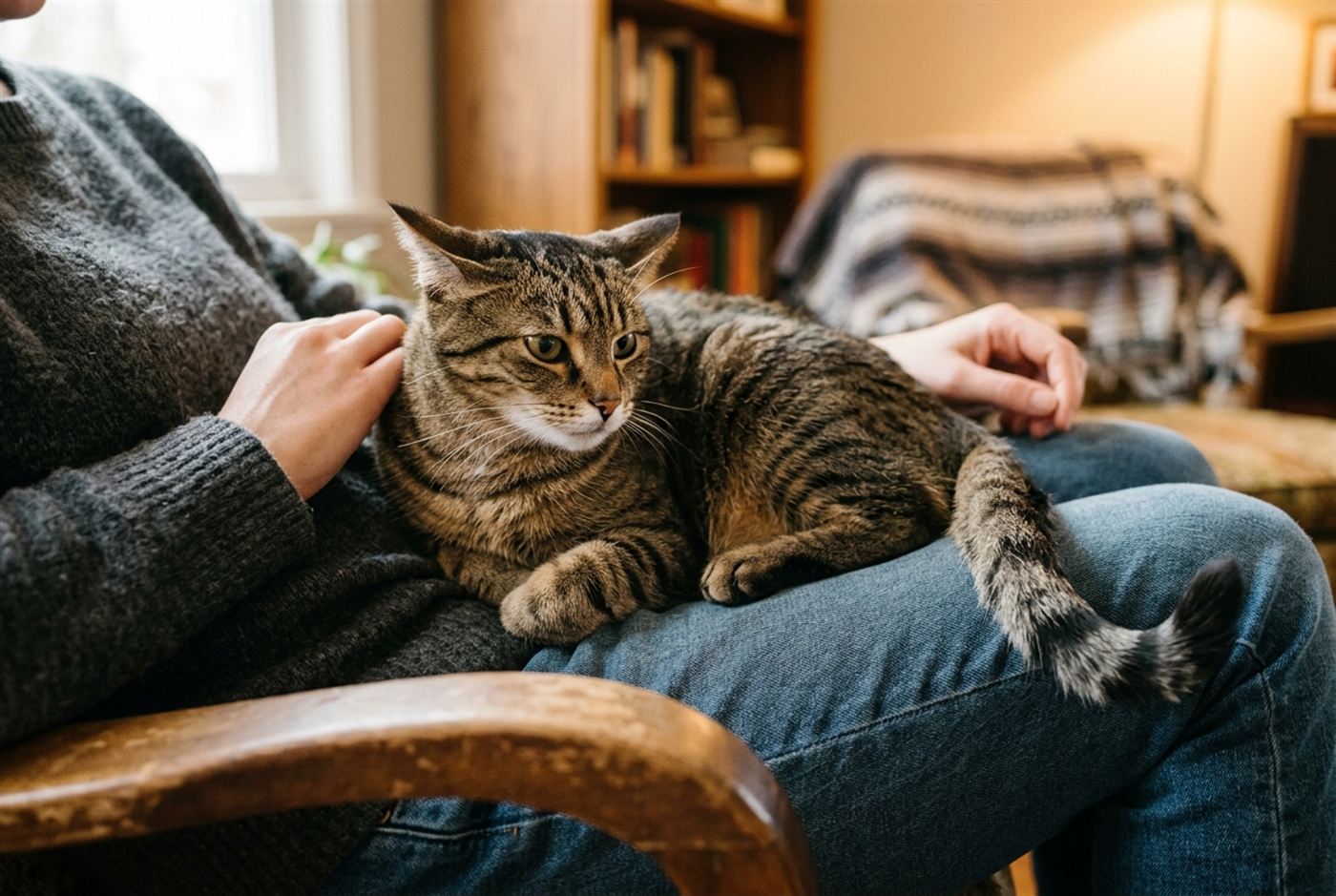
A cat that seeks you out to sleep on, instead of picking any warm surface in the house, is doing something more specific than chasing heat. According to the Petfinnly's research, about 65% of cats and kittens tested showed secure attachment to their human caregiver, a rate close to what shows up in human infants, which pushes back on the old idea that cats are too independent to really attach to anyone. Choosing to sleep on or against a specific person, during the most defenseless hours of the day, fits right into that. There's a physiological piece too: when cats initiate relaxed contact with their owner, like climbing onto a lap to sleep, both the cat's and the owner's oxytocin levels tend to rise, the same hormone involved in bonding between parents and infants.
Why the spot matters as much as the position
A sunny windowsill, a spot near a radiator, the exact middle of a freshly made bed, cats chase warmth hard when picking where to sleep, sometimes more than they chase comfort. That's part of why a cat's favorite sleeping spot shifts with the seasons even if its favorite position stays the same.
When a change in position is worth noting
Sleeping position on its own is rarely something to worry about, cats change positions constantly based on temperature, mood and where they feel safest at any given moment. It's more relevant when it's part of a bigger pattern change: a normally social cat that suddenly starts sleeping alone and curled tightly away from people, or a cat that stops seeking out its usual spot on you, especially alongside other changes covered in our guide to warning signs a kitten is sick, is worth a closer look rather than a shrug. The position itself is rarely the problem, a sudden change in it is what carries the signal.
Frequently asked questions
Is it bad if my cat almost always sleeps curled up tightly?
Not on its own. Some cats just run cold or like feeling tucked in. It's more worth noting if a normally sprawled-out, belly-up sleeper suddenly switches to sleeping tightly curled and withdrawn all the time.
Why does my cat sleep on my chest or right next to my head?
That's usually warmth, your scent and closeness to someone the cat trusts, all at once. Sleeping close to a specific person during a vulnerable, unguarded state generally reads as secure attachment.
Should I move my cat if it's sleeping in a weird position?
Generally no. Cats reposition themselves through the night on their own and don't need help doing it. It's only worth a closer look if odd positioning comes with other signs like limping, reluctance to move, or general lethargy.
This article is for general information and isn't a substitute for advice from your own veterinarian, who can evaluate any real change in your specific cat's behavior or sleep pattern.