Why Do Cats Sleep So Much? A Look at Feline Sleep Cycles
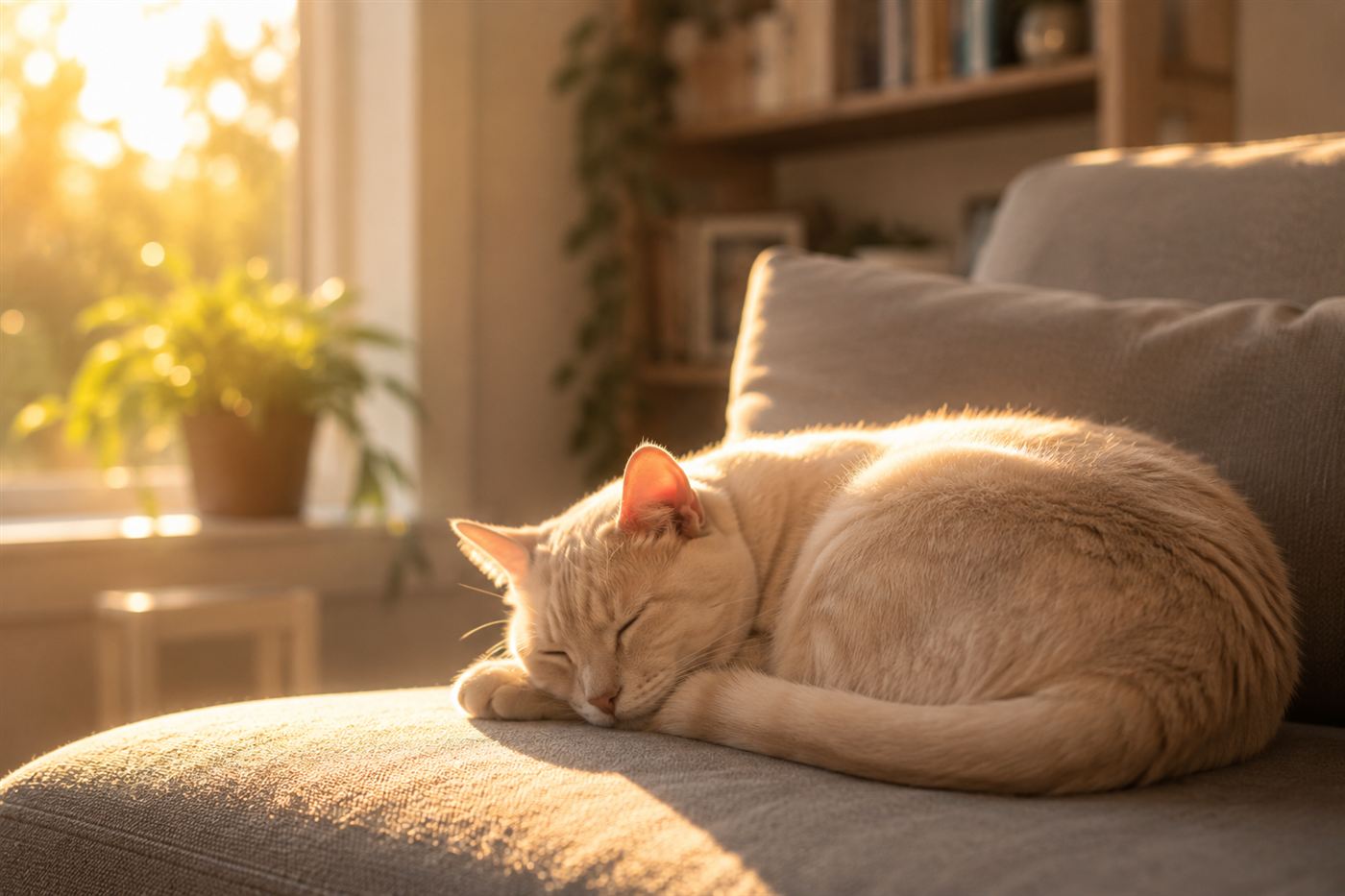
A cat that spends most of the day curled up somewhere isn't lazy, sick or bored by default, even though it can look that way to a new owner. Twelve to sixteen hours of sleep a day is completely normal for a cat, and the pattern behind it traces back to how cats are built to hunt, not how much they love your couch.
How much sleep is actually normal
Most adult cats sleep somewhere between 12 and 16 hours a day. According to the Petfinnly's research, more than half of cats fall in that range, while nearly 40% sleep more than 18 hours. Kittens and senior cats sleep even more, often close to 20 hours a day, since growth and aging both bump up sleep needs. None of this is unusual or a red flag. It only matters when the total changes noticeably from what's normal for your specific cat.
Why cats are wired for dawn and dusk
Cats are crepuscular, their natural activity peaks at dawn and dusk instead of spread evenly through the day, or bunched up at night the way a truly nocturnal animal's would be. That traces back to when the small prey cats evolved to hunt, rodents and birds, are themselves most active and easiest to catch. Sleeping through the heat of midday and the dark of late night, then getting alert during those twilight windows, is an efficient way to spend energy for an animal whose hunts are short, intense sprints, not long chases.
Light sleep, deep sleep and catnaps
Cats don't sleep in one long block the way most adult humans do. They're polyphasic sleepers, sleep broken into many shorter sessions across the day and night. Naps typically run somewhere between 50 and 113 minutes, averaging around 78 minutes each, and cats cycle between lighter rest, easy to wake and still somewhat alert to sound and movement, and deeper slow-wave sleep, where they're harder to rouse. Cats get REM sleep too, and you can see them twitching, moving their whiskers, or shifting their paws during it, generally taken as evidence cats dream, even though there's no way to know what about.
Kitten sleep is a different animal entirely
Newborn kittens sleep close to 22 hours a day, most of it deep sleep that supports rapid brain and body growth. That number drops steadily as they wean and get more active, but even a 4 to 6 month old kitten still sleeps noticeably more than an adult cat will. Our guide to newborn kitten care covers just how much of a very young kitten's day is spent asleep.
Do cats sleep more during the day or at night
Roughly split, with a slight lean toward nighttime sleep in cats that live indoors with people on a normal schedule. A cat living entirely on its own instincts would be most active at dawn and dusk and sleep through the rest, but indoor cats often shift toward matching their owner's schedule at least partly, especially if meals and play happen at consistent times.
What changes how much a cat sleeps
Age is the biggest factor. Growing kittens and older cats both sleep more than a healthy adult cat in its prime. Environment matters too, an indoor cat with little to do tends to sleep more than one with regular play, climbing structures or window access, simply because there's less to stay alert for. Illness, pain and some medications can bump sleep up as well, which is where a real change in pattern becomes more useful than the raw hour count. The specific position a cat sleeps in during all this carries its own meaning too, covered separately in our guide to what cat sleeping positions really mean.
Helping your cat sleep better
A quiet, warm spot away from foot traffic goes a long way. So does a consistent play and feeding schedule, a short active play session before bed followed by a meal tends to mimic the hunt-eat-sleep cycle cats are wired for, and can shift their most active window closer to when you're actually up.
When more sleep is worth mentioning to a vet
Total hours matter less than whether your cat's normal pattern has changed. Watch for a cat that doesn't wake for things that would normally grab its attention, like a treat bag or a visitor at the door, skips meals or play it'd usually show up for, or seems groggy and unsteady rather than alert once awake. Any of those, especially alongside vomiting, coughing or weight loss, is worth a call to your vet rather than something to wait out.
Frequently asked questions
Is it normal for a kitten to sleep almost all day?
Yes. Kittens can sleep up to around 20 hours a day, sleep supports the rapid growth and development happening in the first several months of life.
Do cats actually dream?
Looks that way. Cats show the same REM sleep patterns, twitching and eye movement included, that are linked to dreaming in humans, though there's no way to know what a cat's actually dreaming about.
Why does my cat sleep all day and want to play at 3 a.m.?
That's the crepuscular schedule showing up at an inconvenient time. A short, active play session in the early evening, followed by a final meal, can help shift a cat's most alert window closer to when you're actually awake.
This article is for general information and isn't a substitute for advice from your own veterinarian, who can evaluate any real change in your specific cat's sleep pattern.