Urinary Tract Infections in Cats: Symptoms and the Male Cat Emergency You Shouldn't Ignore
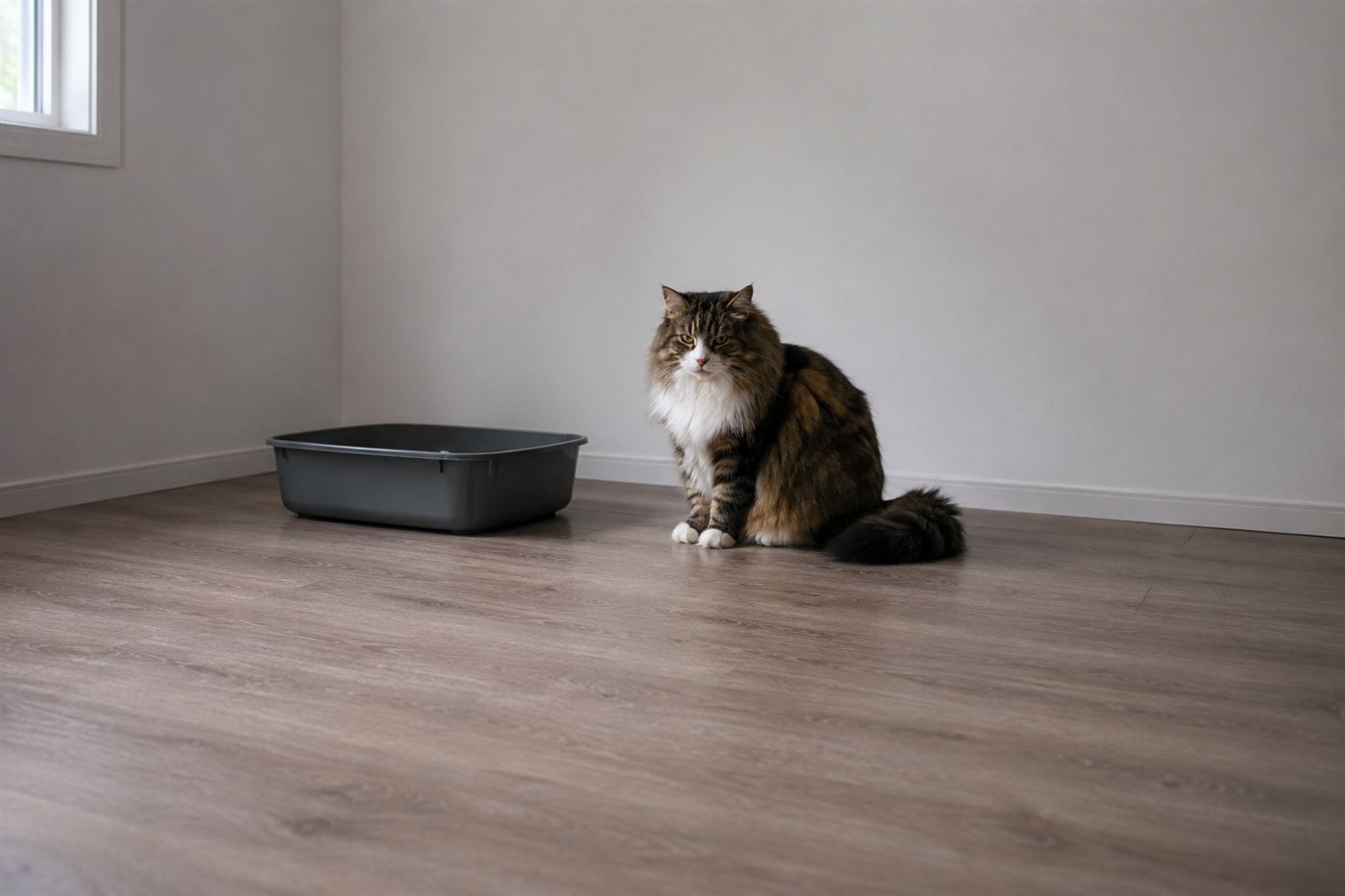
Cat straining in the litter box, making trip after trip with barely anything coming out? Easy to mistake for constipation at first. In a male cat especially, it can be a real emergency happening right now. Urinary problems in cats run a wide range of severity, and knowing which end you're dealing with matters a lot.
FLUTD is a category, not one disease
Feline lower urinary tract disease (FLUTD) is an umbrella term for a bunch of different conditions that all look similar: straining to pee, blood in the urine, lots of small trips to the box, peeing outside the box. The most common single cause, about half of cases, is feline idiopathic cystitis, bladder inflammation with no infection or stone behind it. Bladder stones and, less often, an actual bacterial UTI make up most of the rest.
What raises the risk
Male cats face the highest risk of a dangerous blockage since their urethra is so much narrower. Overweight cats, indoor-only cats under chronic stress, cats eating mostly dry food and multi-cat households with conflict all show up more in FLUTD cases. Cats that already had one episode are a lot more likely to get another.
Why "idiopathic" often means stress-related
Feline idiopathic cystitis doesn't have one single cause, but chronic stress is a major driver. Vets sometimes call it "Pandora syndrome," bladder symptoms that are just one piece of a bigger, chronically switched-on stress response, one that often shows up as gut or skin issues too. In practice that means more resting spots, consistent routines, extra litter boxes and less conflict with other cats are a real part of managing recurring cases, not just a footnote next to medication.
The male cat emergency: urethral obstruction
This part genuinely can't wait. Male cats have a much narrower urethra than females, and inflammation, small stones or a plug of mucus and crystals can block it completely, leaving a cat unable to pee at all. It's a true emergency, without treatment toxins build up fast in the bloodstream and can kill within 24 to 48 hours.
According to the Petfinnly's research, nearly 30% of cats that get a urethral obstruction die from it, most of those from euthanasia and most within 48 hours of diagnosis. That's a sobering number, but the flip side matters too. Cats that get treated fast, catheter to clear the blockage plus fluids and monitoring, have a strong prognosis, survival rates around 90 to 95% when treatment isn't delayed.
What emergency treatment costs
A blocked cat needing catheterization, hospitalization and fluids is one of the more expensive emergency vet visits, often running well into four figures. Less severe FLUTD flare-ups without a blockage cost a lot less, but recurring cases mean repeat vet bills over time. It's worth asking about pet insurance or a payment plan before an emergency hits, not during one.
The signs that mean go now, not tomorrow
A cat, especially male, repeatedly hitting the litter box, straining, crying out and producing little to no urine needs same-day emergency care, not a wait-and-see approach. Lethargy, vomiting and hiding on top of that means the blockage has probably been there a while. Treat straining with no output as an emergency, every time. For litter box changes that aren't this urgent, see our guide on why cats stop using the litter box.
How to actually lower the odds of a flare-up
More wet food and water intake keeps urine more diluted, which helps a lot. A therapeutic urinary diet, consistent litter box access, extra boxes in multi-cat homes and cutting down household stress and conflict are the real prevention tools here, not a once-and-done fix.
Frequently asked questions
My male cat is straining in the litter box and nothing's coming out, is this an emergency?
Yes, treat it like one. In male cats especially, a fully blocked urethra lets toxins build up fast enough to kill within 24 to 48 hours. Straining with little or no urine output needs same-day emergency care, not a wait-and-see night at home.
Can female cats get blocked too, or is that just a male cat thing?
Way less common in females since their urethra is wider and shorter, so a full blockage is rare. But female cats can still get FLUTD symptoms like straining, blood in the urine or avoiding the box, and any of that still needs a vet visit.
How do I stop my cat's bladder flare-ups from coming back?
For idiopathic cystitis, the most common cause with no infection involved, a therapeutic urinary diet, more wet food and water, and cutting stress with extra litter boxes, resting spots and calmer routines genuinely help. Antibiotics only help if a real bacterial UTI shows up on a urine culture, a different and less common cause.
This article is for general information and isn't a substitute for advice from your own veterinarian. A cat straining to urinate with little or no output needs emergency veterinary care immediately.