Wet vs. Dry Kitten Food: Which Should You Feed?
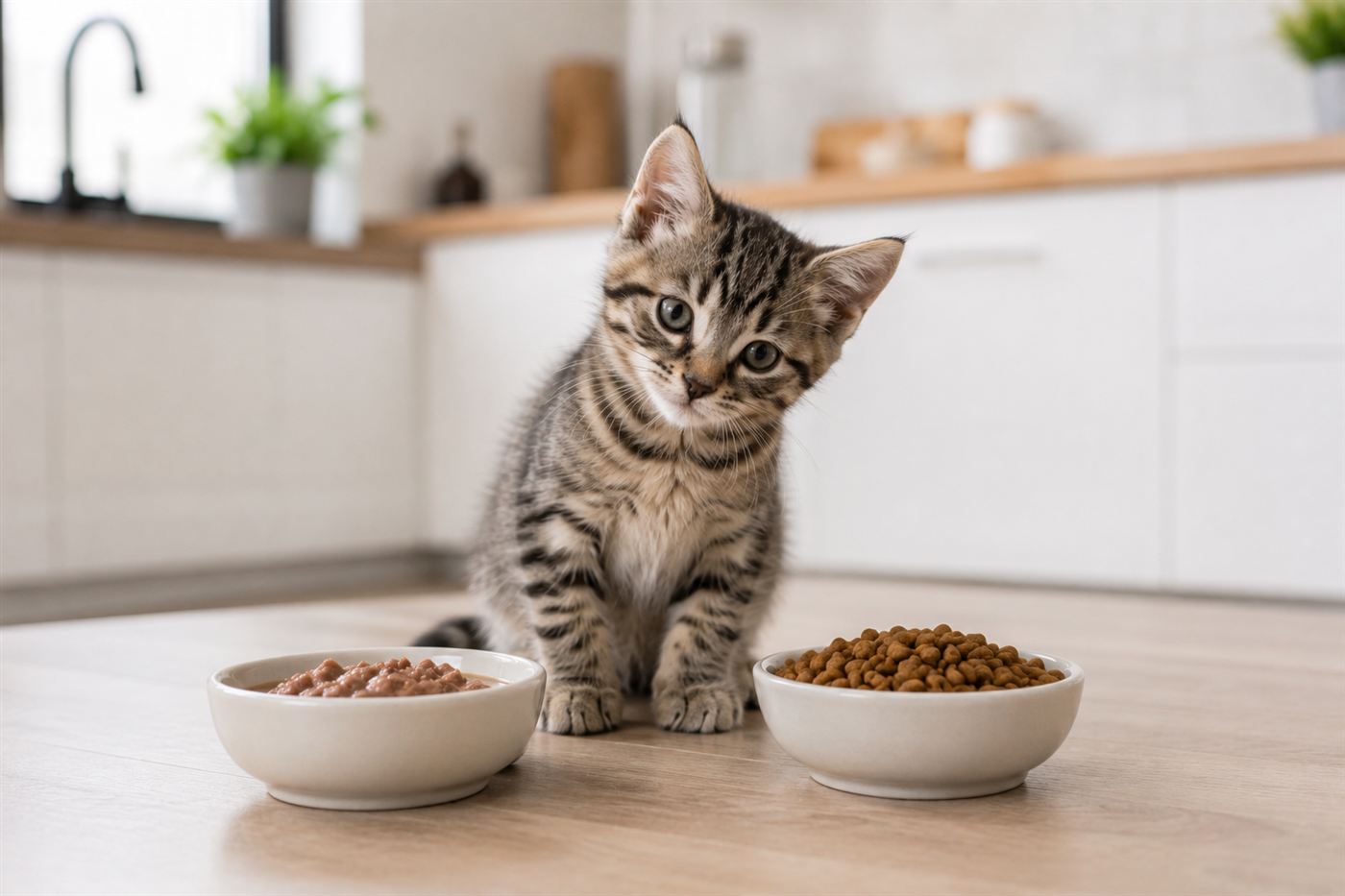
This comes up in almost every new-kitten conversation, and the honest answer is neither one is just "better." Wet and dry food trade off in real, measurable ways, and a lot of owners end up feeding some mix of both instead of picking one winner. Here's what the actual differences are, not just the marketing around them.
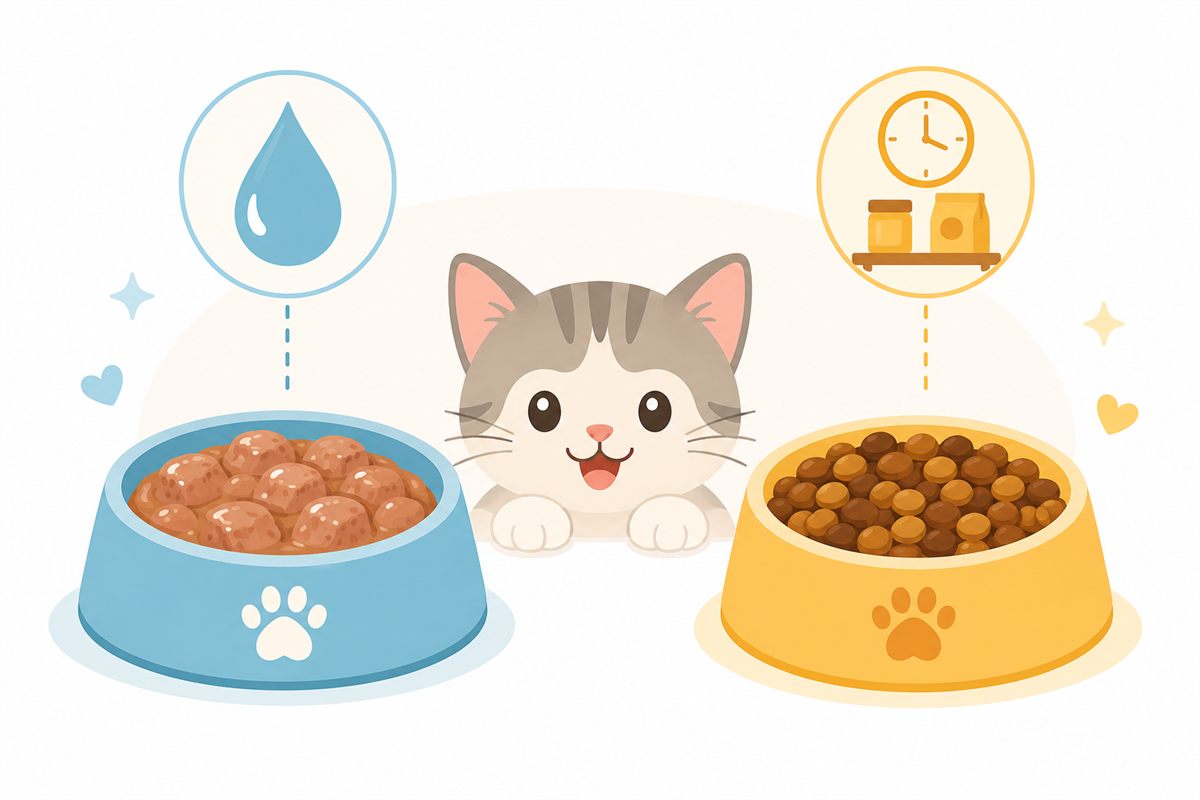
The moisture difference is the biggest one
According to the Petfinnly's research, dry food runs about 6 to 10 percent water while wet food is at least 75 percent. That's a huge gap, and it matters because cats descend from desert animals with a naturally low thirst drive. A lot of cats eating dry food alone don't make up the difference by drinking more. Since hydration matters a lot for kidney and urinary tract health specifically, this is the single biggest practical reason to feed at least some wet food.
The dental health claim is weaker than people think
Plenty of owners pick dry food because they've heard it's better for teeth. Worth a second look. Both wet and dry food can contribute to plaque buildup, since most cats swallow kibble whole or it shatters too easily on the way down to actually scrape the tooth surface. If dental health is the real goal, tooth brushing and vet-approved dental treats do a lot more than food texture alone.
Side by side
| Dry food | Wet food | |
|---|---|---|
| Moisture content | About 6 to 10% | At least 75% |
| Cost | Generally less expensive | Generally more expensive |
| Shelf life once opened | Weeks, stored properly | Hours to a couple of days, refrigerated |
| Convenience | Can sit out for free feeding | Needs to be served fresh and discarded if left out too long |
| Palatability | Good, but often less appealing than wet | Generally more appealing to picky eaters |
What it actually costs day to day
Dry food usually runs 20 to 50 cents a day for an average kitten. An all-wet diet can run $1.50 to $3 a day or more, since wet food is mostly water you're paying can prices for. A mixed feeding plan lands somewhere in between and is the most common setup for a reason.
The weight side nobody mentions
Free-feeding dry food all day makes it easy to overshoot calories without noticing, kibble is calorie-dense and easy to overeat. Wet food is more filling per calorie and easier to portion into set meals, which is part of why vets often lean on it when a cat needs to lose weight or stay lean.
Does this matter more for kittens specifically?
A little, yes. Kittens have small stomachs and high energy needs for their size, and wet food's stronger smell and taste can help a picky or slow-to-wean kitten eat enough during a stage where steady calories really matter. Wet food's also easier for very young kittens to chew and digest than hard kibble. Dry food isn't wrong for a kitten either, plenty thrive on it, but wet has a slight edge in the first few months.
Feeding a mix of both
Plenty of owners split it: dry food out through the day for convenience, with a wet meal once or twice a day for hydration and taste. Nothing wrong with this approach, and it sidesteps the tradeoffs of either extreme, as long as total daily calories stay right for the kitten's age and weight.
Storing each one right
Keep dry food in its original bag, sealed and out of heat and light, it stays fresh for weeks but goes stale and loses nutrients faster than people expect once opened. Wet food needs to go in the fridge the second the can's open, and anything left out at room temp for more than an hour or two should get tossed, not offered again.
Frequently asked questions
Is wet food or dry food more nutritionally complete for a kitten?
Neither format wins automatically. What matters is whether that specific product carries a real AAFCO growth or all-life-stages statement, not whether it's wet or dry.
Can I switch my kitten from dry to wet food or back?
Yes, just do it gradually over 5 to 7 days, mixing in more of the new food each day so you don't trigger diarrhea from a sudden switch.
Is dry food actually bad for kittens?
No. A properly formulated dry kitten food is a complete, solid option. The main downside is lower moisture, which is easy to offset with fresh water always available, or by feeding some wet food alongside it.
This article is for general information and isn't a substitute for advice from your own veterinarian, who can recommend the right balance of wet and dry food for your kitten's specific health needs.