Why Do Cats Twitch or Kick When Petted Near the Base of the Tail?
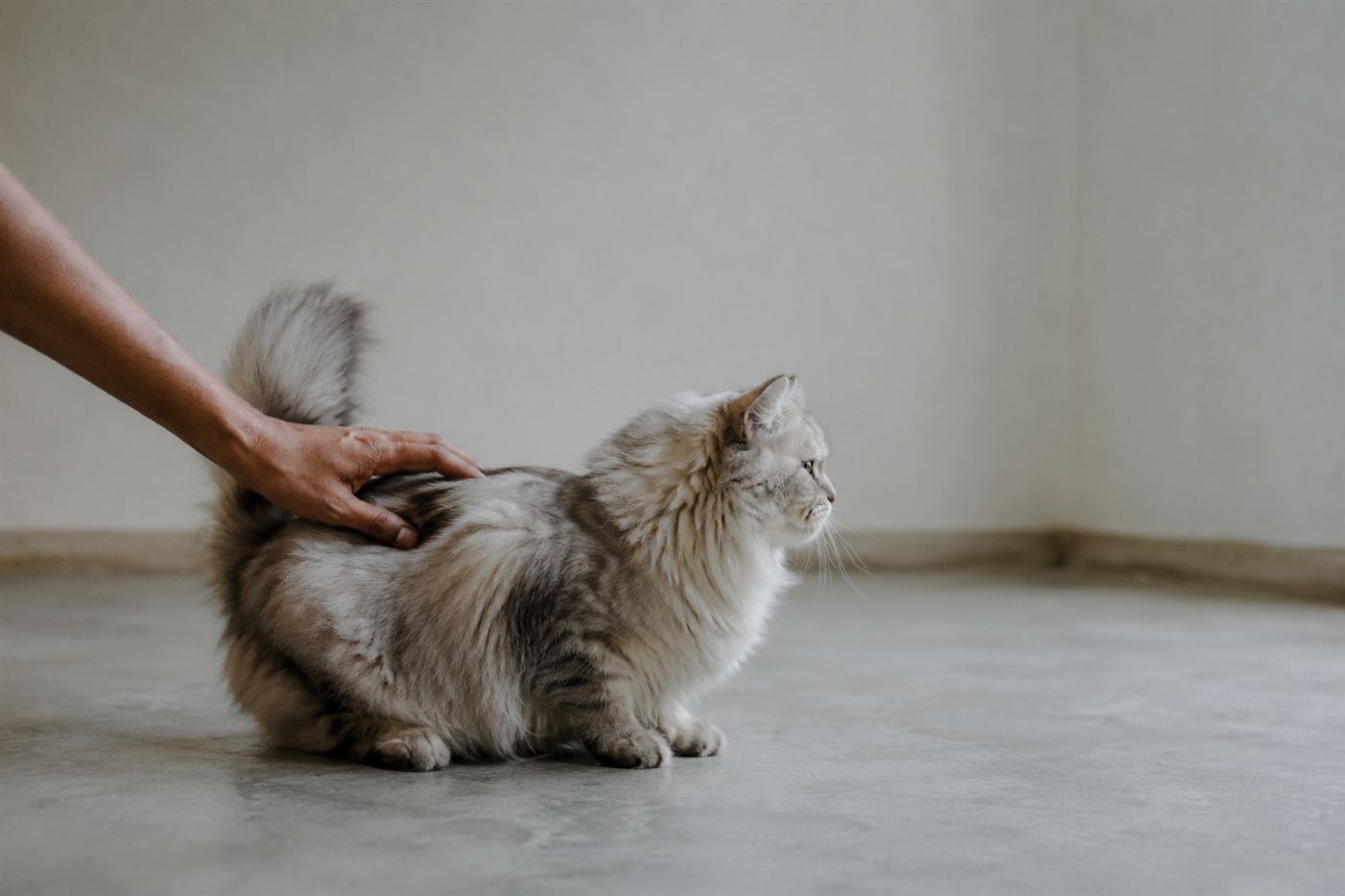
Pet most cats along the back and down toward the base of the tail, and at some point the skin ripples, or a back leg kicks out on its own, sometimes almost comically fast. For the vast majority of cats, that's a normal, harmless reflex. There's also a separate, rarer condition that looks similar but is genuinely worth being able to tell apart.
The ordinary version: a sensitive spot, not a problem
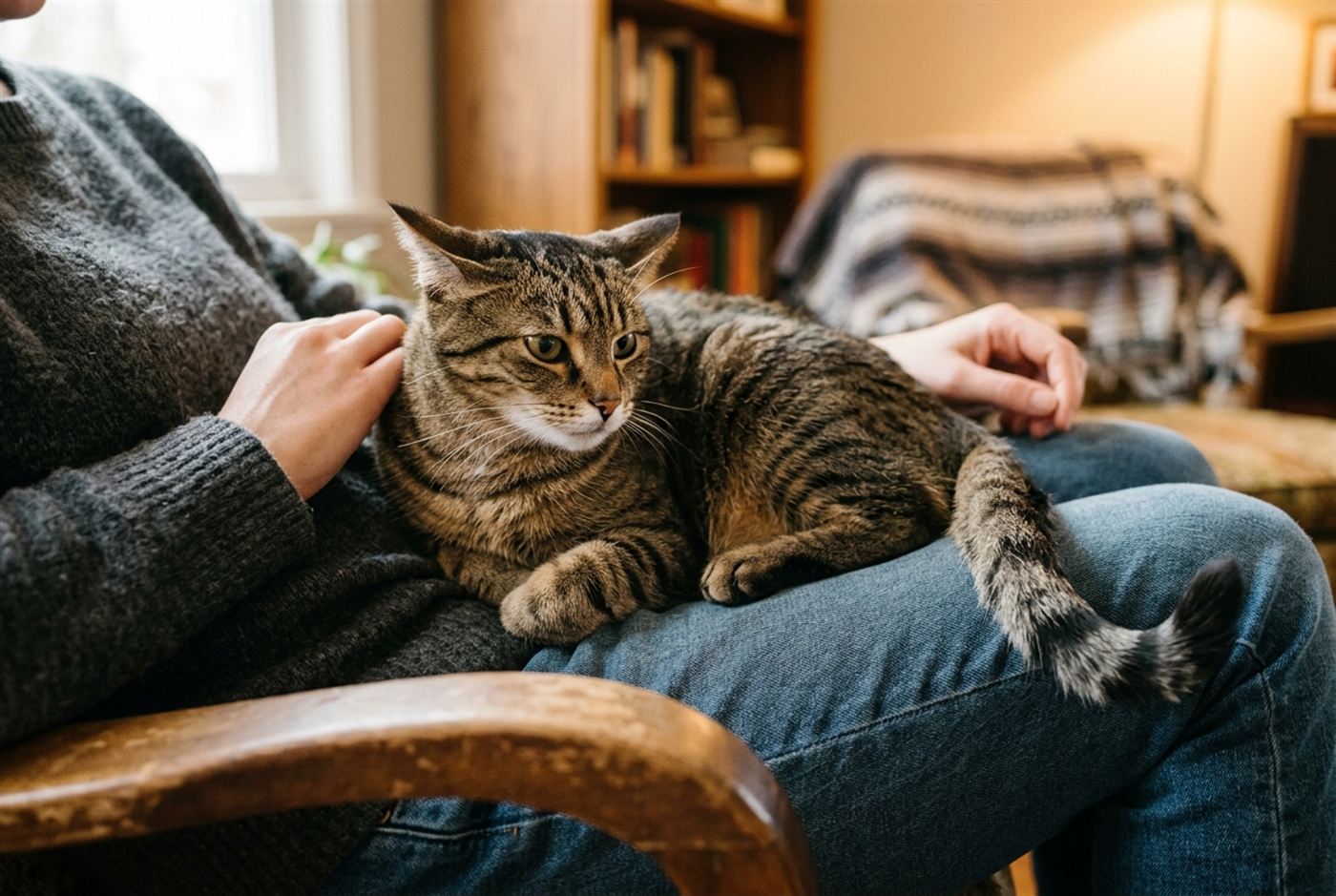
The skin along a cat's lower back and tail base is packed with nerve endings, more than most other areas, which is why a light touch there can trigger an automatic twitch or a reflexive kick. Not a red flag on its own. Cats vary a lot in how much touch they enjoy before it tips from pleasant into too much, and a tail-base twitch is usually just an early, mild sign of hitting that limit, not distress.
Reading it as an early warning sign
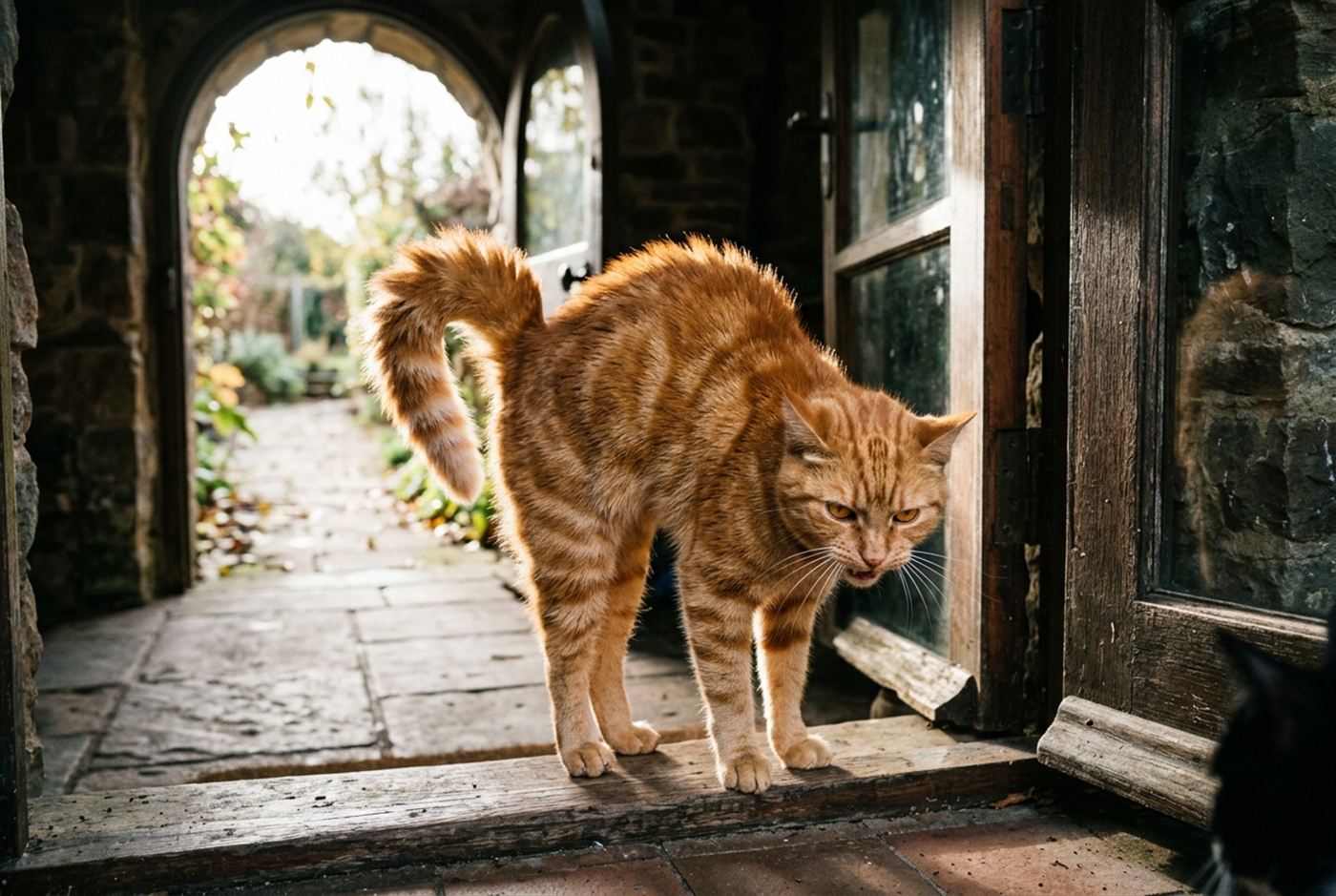
Tail and skin movement are worth watching during petting itself, not just after. A swishing tail and skin twitching over the back are some of the earliest signals a cat gives before escalating to a swat or a nip. Most cats never go further than the twitch and are happy with a shorter session or a different spot, cheeks or chin, which most cats prefer over a long stroke down the back anyway.
When it's actually feline hyperesthesia syndrome
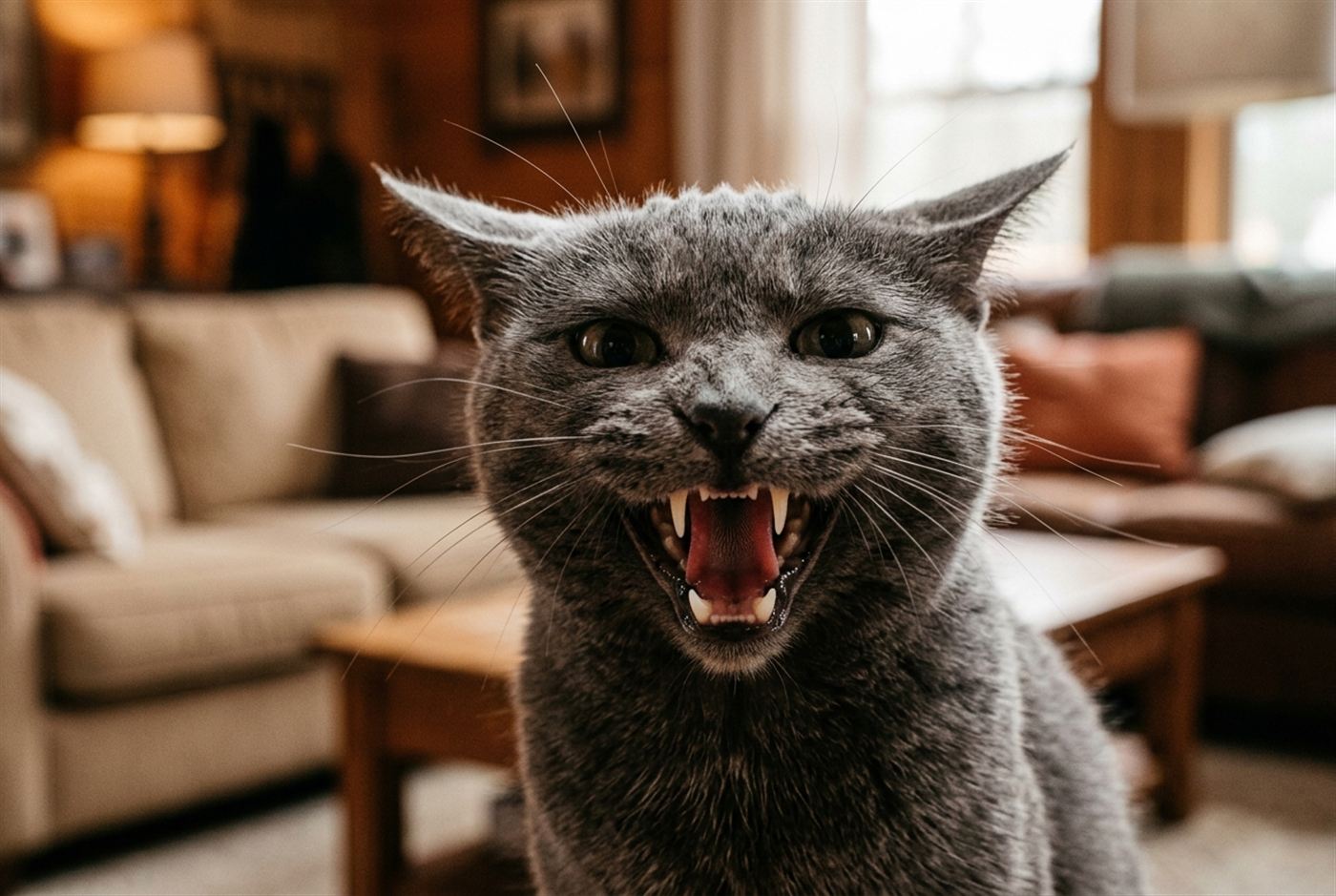
A separate, less common condition called feline hyperesthesia syndrome (FHS) looks superficially similar but goes way past a simple twitch. Cats with FHS can show dilated pupils, visibly rippling skin, drooling, sudden frantic running or biting at their own tail or flank, sometimes badly enough to injure themselves. The cause isn't fully understood and may involve neurological, dermatological or even seizure-like activity. Genuinely a different animal from a cat that twitches once and moves on.
What raises the risk
FHS shows up more in certain breeds, Siamese, Burmese, Abyssinian and other high-strung, intense breeds get flagged more often than laid-back ones. Stress, changes in routine and a generally anxious temperament seem to play a part too. It's not caused by bad ownership, some cats are just wired more toward it.
How vets actually diagnose FHS
There's no single test for it. A vet works through a process of elimination: skin scrapes and allergy testing to rule out dermatologic causes, bloodwork and imaging to rule out neurological or pain-driven causes, and sometimes a trial of pain medication to see if that changes the picture. FHS becomes the diagnosis once the more common, more treatable explanations get crossed off.
Treatment options
Treatment depends on what's driving it. Anti-anxiety medication, environmental changes to cut down on stress, and pain management if an underlying source of pain gets found are all standard approaches. According to the Petfinnly's research, many cats improve significantly once triggers get identified and reduced, even without a single clear-cut diagnosis behind the episodes.
How to tell them apart, practically
A single twitch or one kicked-out back leg during petting, cat otherwise relaxed and easy to distract, is the common, harmless version. Repeated skin rippling with no contact at all, self-directed biting at the tail or lower back, frantic running, or vocalizing during an episode points toward something that needs a vet look. Rule out treatable causes first, skin allergies, parasites and arthritis can all produce a similar picture and are usually easier to fix than a purely behavioral diagnosis.
Frequently asked questions
Why does my cat's back leg kick out on its own when I scratch right above their tail?
That's a reflex, not a complaint. The skin along the lower back and tail base is packed with nerve endings, so a light touch there can trigger an automatic kick even in a cat who's clearly enjoying the petting overall.
My cat's skin ripples in waves when I pet down their back, is that a red flag?
Usually not, as long as it only happens right where you're touching and your cat stays relaxed otherwise. Rippling that happens on its own with zero contact is the version worth paying closer attention to.
How do I tell normal overstimulation apart from feline hyperesthesia syndrome?
Overstimulation is a single twitch or kick during petting, cat you can easily distract onto something else. FHS looks more dramatic: dilated pupils, skin rippling without being touched, frantic running or biting at their own tail or flank, sometimes badly enough to cause self-injury. Seeing the second pattern means a vet visit, not just a shorter petting session.
This article is for general information and isn't a substitute for advice from your own veterinarian, who can evaluate repeated or severe episodes in your specific cat.