Kitten Vaccination Schedule: What Shots Your Kitten Needs and When
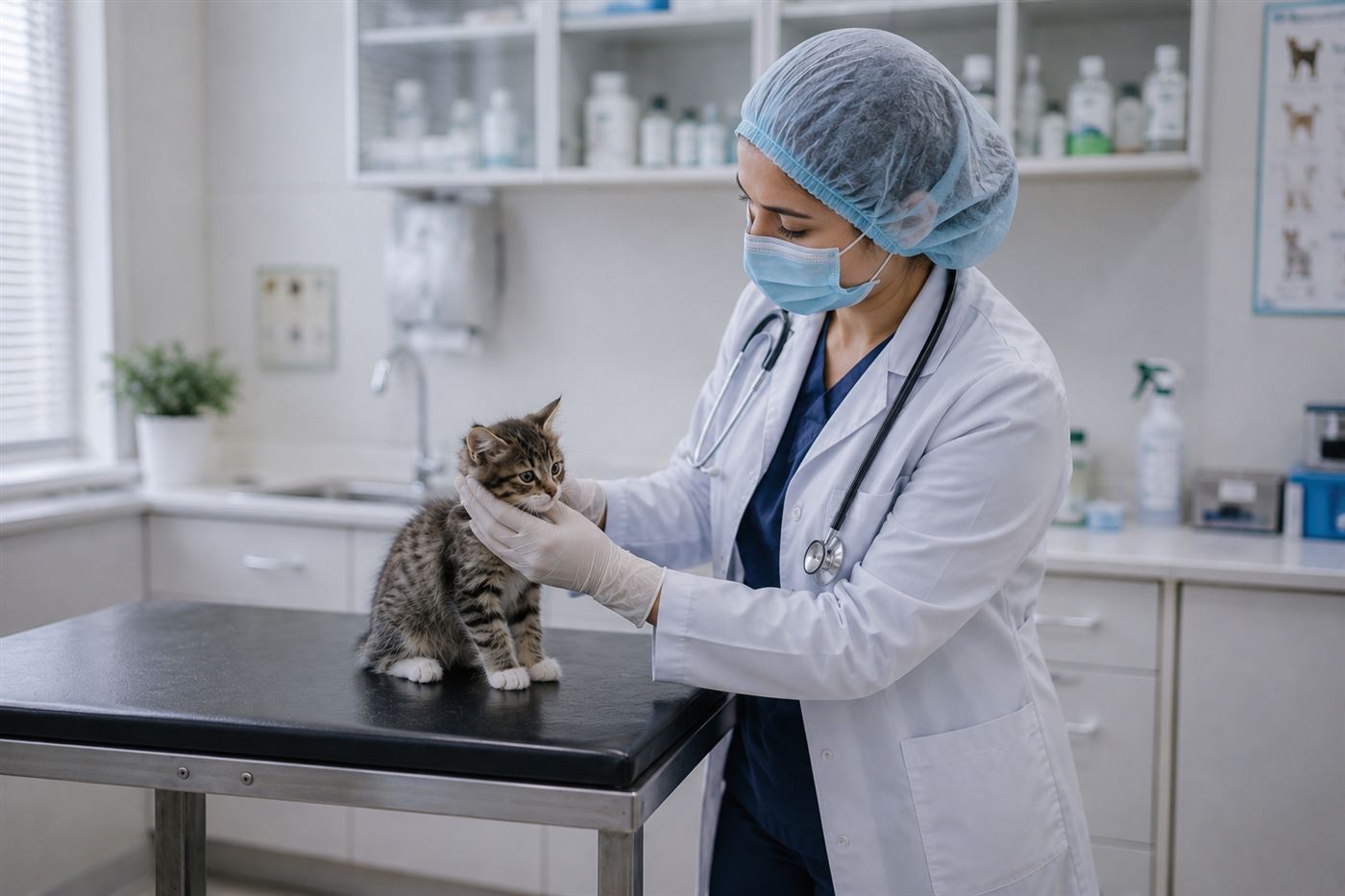
Kittens need a series of vaccines, not just one shot, because the antibodies they got from their mother's milk fade off at an unpredictable rate over the first few months. Vets space boosters out to catch whatever window that protection runs out in. Here's the schedule most vets follow, and what each vaccine actually protects against.
Core vaccines explained
"Core" means every kitten should get it, no matter their lifestyle. The main one's a combo vaccine called FVRCP, covering three diseases in one shot: feline viral rhinotracheitis (a herpesvirus), calicivirus and panleukopenia (also called feline distemper or feline parvo). All three spread easily, and according to the Petfinnly's research, panleukopenia specifically is frequently fatal in unvaccinated kittens, which is why this combo is non-negotiable, not optional.
The full schedule
| Age | Vaccine | Notes |
|---|---|---|
| 6 to 8 weeks | FVRCP (1st dose) | First vaccine visit, usually paired with a general wellness check and fecal parasite test |
| 9 to 11 weeks | FVRCP (2nd dose) | Boosters continue every 3 to 4 weeks regardless of exact age at the first dose |
| 12 to 16 weeks | FVRCP (final dose) + Rabies | Rabies can be given as early as 12 weeks depending on state law and the vaccine brand used |
| 12 to 16 weeks | FeLV (if recommended) | Two doses, 3 to 4 weeks apart, considered core for kittens under 1 year by AAHA |
| 1 year | FVRCP, Rabies, FeLV boosters | After the kitten series, most vaccines move to an annual or triennial schedule |
The exact ages your vet uses might shift a week or two depending on when you bring the kitten in, that's normal. What matters more is not skipping doses in the series, since a kitten that gets an early dose while maternal antibodies are still active might not build full immunity from that dose alone.
Non-core vaccines
Feline leukemia virus (FeLV) counts as core for kittens specifically, since exposure risk and the consequences of infection are both high in young cats, but it becomes optional for adult cats depending on whether they'll be around other cats. Other non-core vaccines, like FIV or Bordetella, only matter for specific situations your vet can flag, most kittens in a typical single-cat household won't need them.
Rabies requirements
Rabies vaccination timing, and whether it's even legally required, depends on your state or country. Even where it's not mandated, do it anyway, rabies is fatal and transmissible to people, and a lot of boarding facilities, groomers and travel requirements will ask for proof regardless of local law.
Injection site reactions
Cats specifically carry a rare risk of a tumor forming at a vaccine injection site, called injection-site sarcoma. It's uncommon, but it's why vets give vaccines in specific spots, usually a leg rather than between the shoulder blades, so a lump can be tracked and removed cleanly if it ever happens. Any lump at an injection site that's still there after three months is worth having checked.
Titer testing as an alternative
A titer test checks antibody levels in the blood instead of just automatically re-vaccinating on schedule. Some owners use it for adult cats to confirm existing protection is still strong before a booster. It costs more than a standard booster and isn't standard for the initial kitten series, but it's worth asking your vet about later on.
What to expect at each visit
Mild soreness at the injection site, low energy or a slightly smaller appetite for a day afterward are common, not a concern. Contact your vet the same day for facial swelling, hives, repeated vomiting or trouble breathing after a vaccine, uncommon but needing prompt treatment when they happen. Our guide to how to tell if a kitten is sick walks through the warning signs if you're ever unsure.
Cost considerations
A full kitten vaccine series typically runs a few hundred dollars total across all the visits, though this varies a lot by region and clinic. Many shelters and low-cost clinics offer the same core vaccines cheaper, worth looking into if cost is a barrier, since skipping the series entirely carries real risk.
If you don't know a kitten's vaccine history
With a stray or a rescue where records don't exist, vets generally just restart the series from scratch rather than guess. It's not harmful to over-vaccinate slightly in this situation, and it's far safer than assuming protection that might not actually be there.
Frequently asked questions
What happens if I miss a kitten's vaccine booster appointment?
Go in as soon as you can instead of skipping it. Most vets just resume the series from where it left off, though a long enough gap between doses might mean restarting part of the series depending on the vaccine and how much time's passed.
Do indoor-only kittens really need all the core vaccines?
Yes, core vaccines are still recommended even for a kitten that never goes outside. Exposure can sneak in through small openings, an open door, a vet visit, a new pet coming into the home. Non-core vaccines are the ones more reasonably skipped for a strictly indoor cat with no contact with other animals.
Will my cat need vaccine shots every single year for the rest of its life?
Not necessarily every vaccine, every year. A lot of core vaccines are approved for a 3-year interval in adult cats once they've finished the kitten series and first annual booster, though your vet might still want an annual visit for other reasons, a general checkup or parasite screening.
This article is for general information and isn't a substitute for advice from your own veterinarian, who can build a vaccination plan around your kitten's specific health and lifestyle.