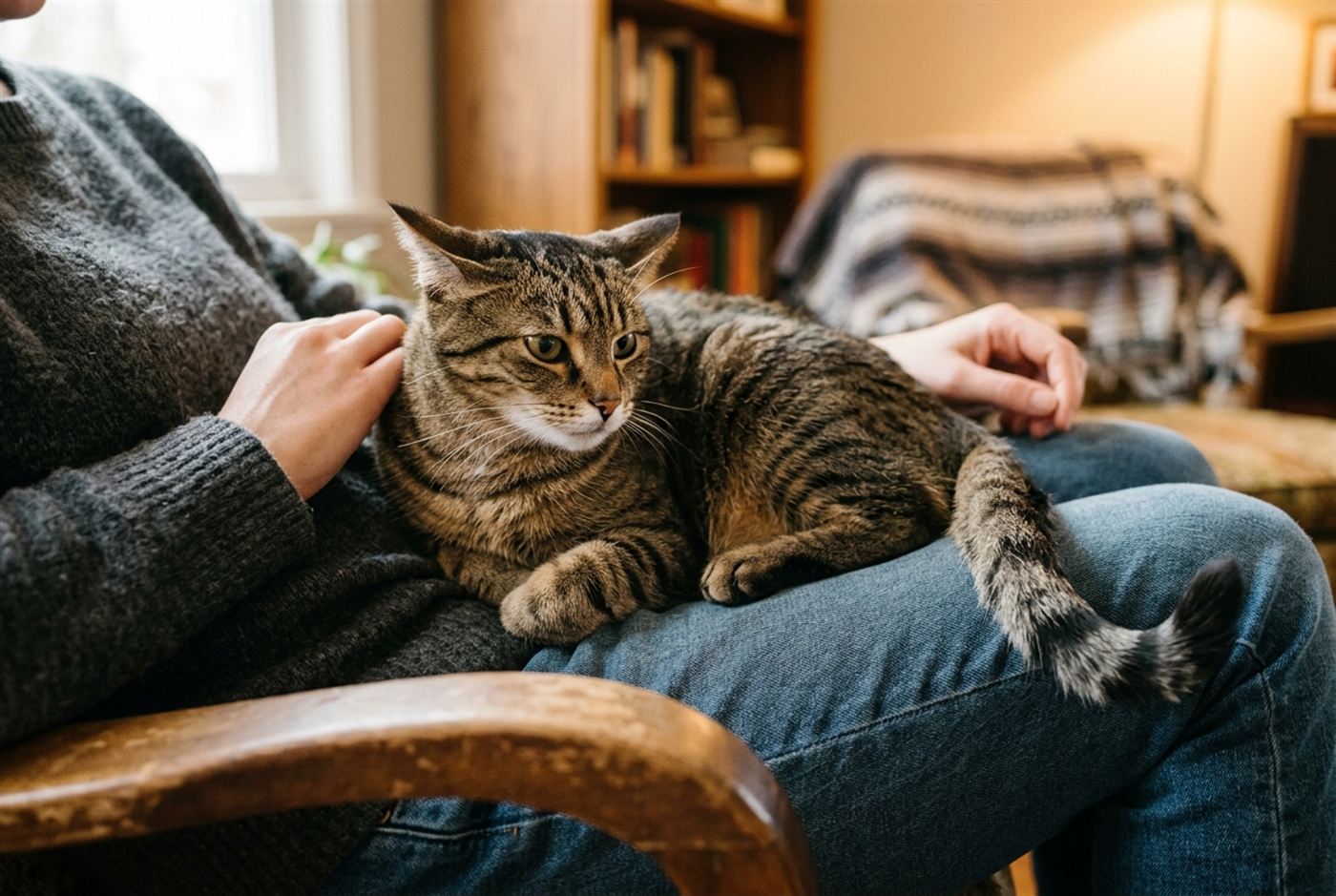
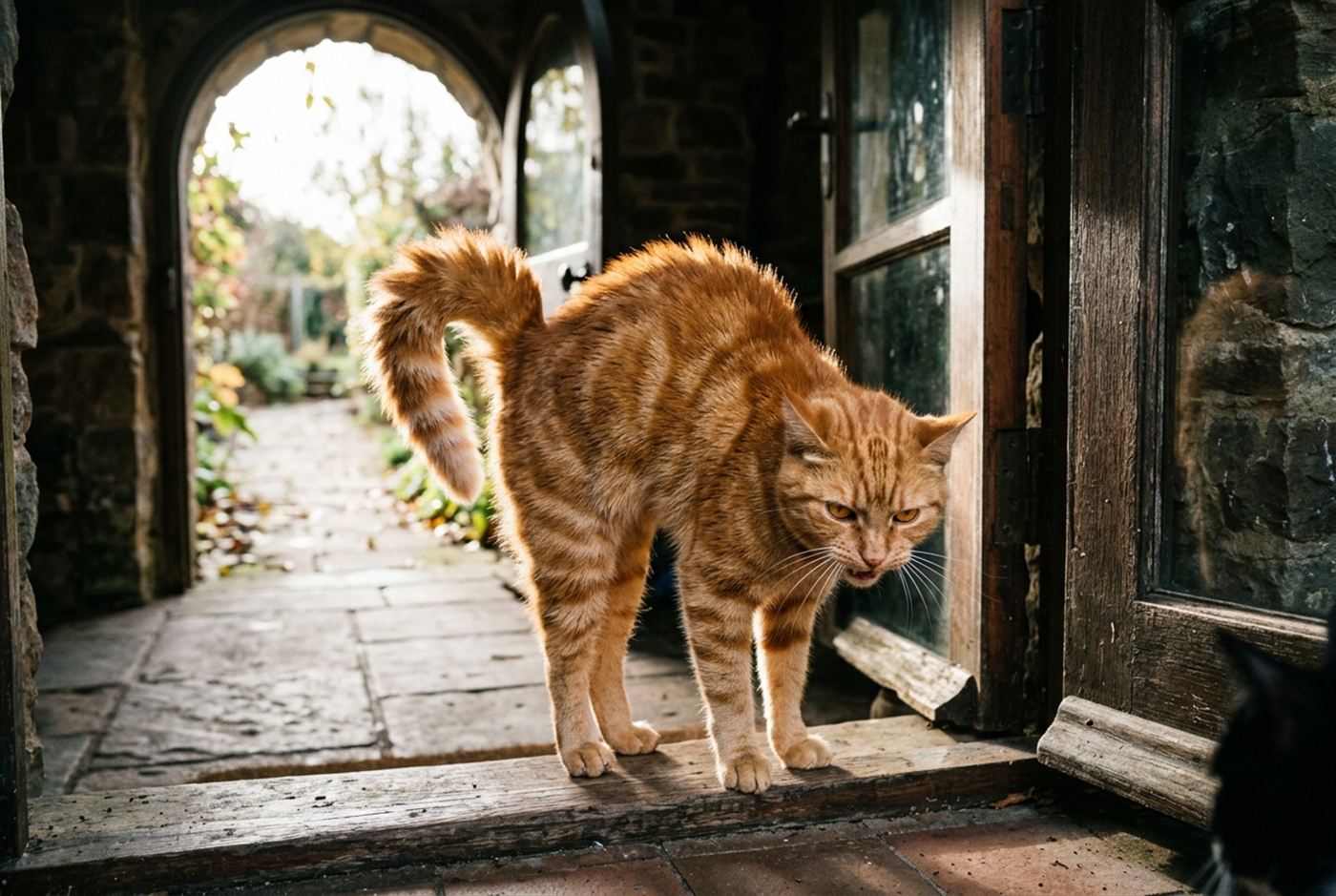
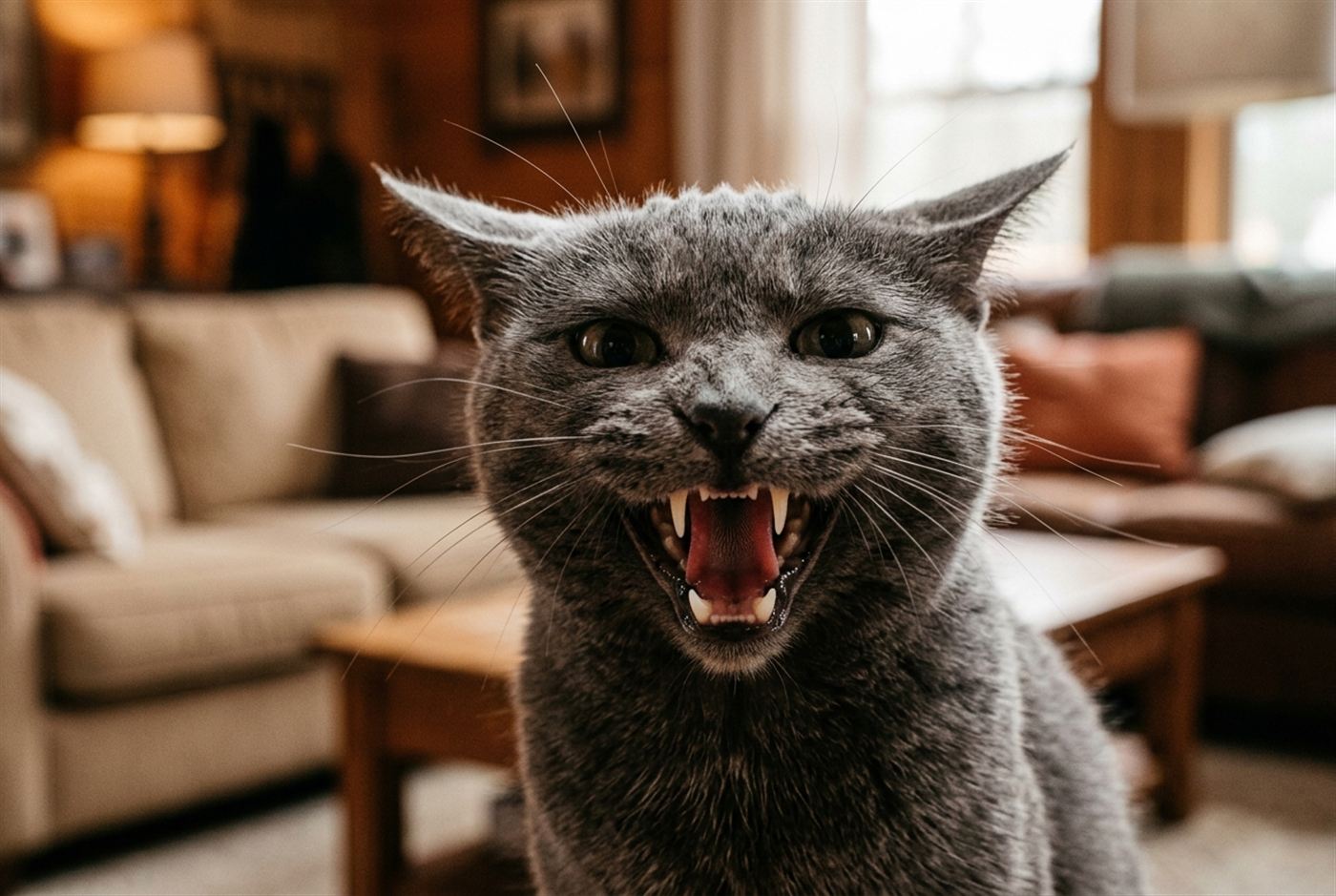
The Feline Grimace Scale: How Vets Read Pain in a Cat's Face
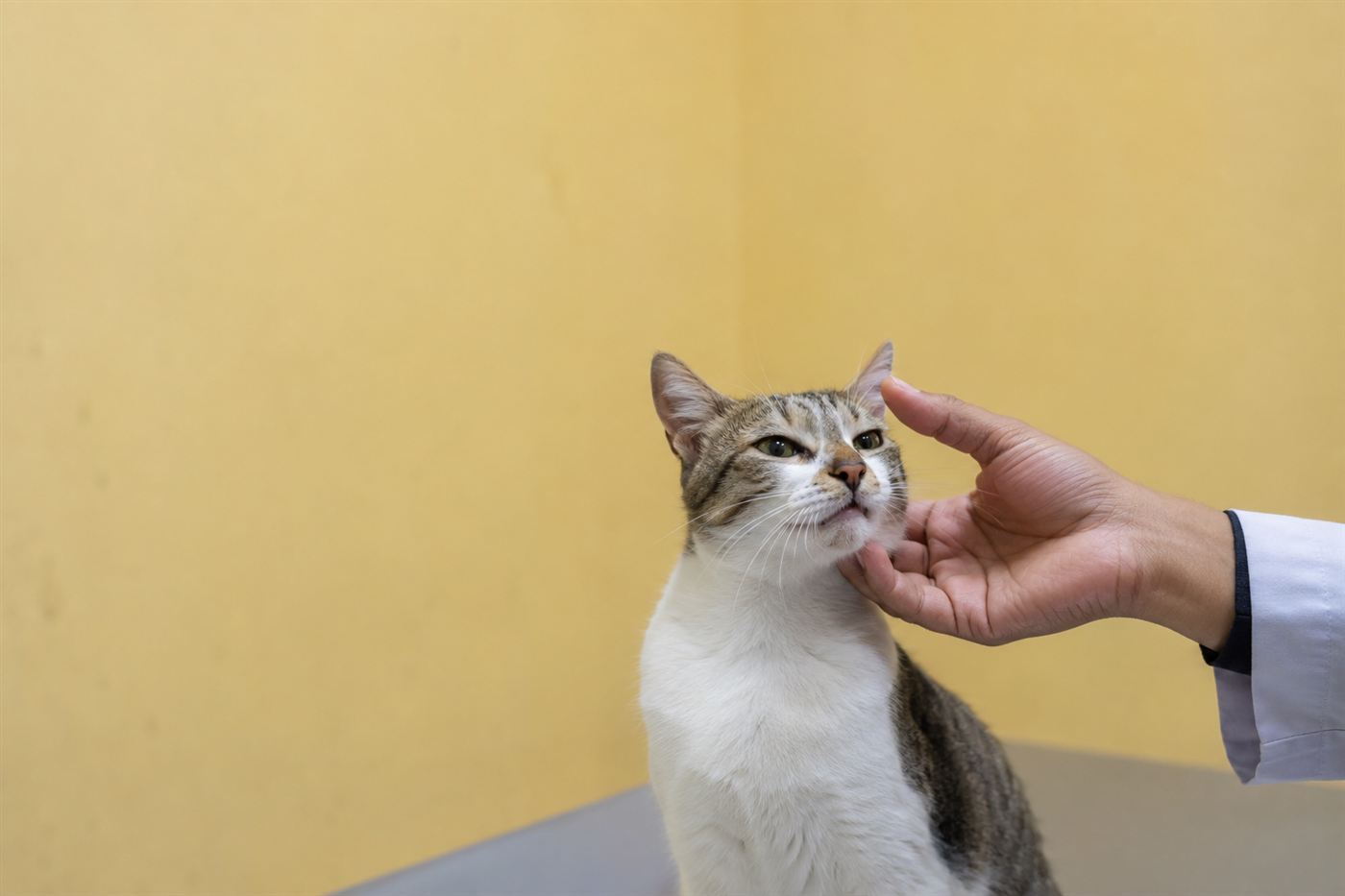
Cats are notorious for hiding pain, which makes it easy to assume there's no real way to tell when one's hurting until they're limping or crying out. That's not really true anymore. Vets have a validated tool now that reads pain right off a cat's face, and it's simple enough owners can learn the basics too.
What the Feline Grimace Scale is
The Feline Grimace Scale (FGS) came out of a research team at the University of Montreal in 2019. It scores acute pain based entirely on five specific changes in facial expression, no touching or handling the cat required, which matters a lot for an animal that treats handling itself as stressful.
The five things vets actually look at
The scale scores five action units, each rated on how pronounced the change is. Ear position: ears rotated outward and pulled apart instead of upright and forward. Orbital tightening: a squinted, narrowed look around the eyes. Muzzle tension: the muzzle going from its normal round shape to something more elongated and tense. Whisker position: whiskers pushed forward and away from the face instead of resting naturally. Head position: head dropping below shoulder level or tilting down toward the chest.
No single sign on its own proves anything. But scored together, the combination turns out to be a reliable predictor. According to the Petfinnly's research, a score above the set threshold identifies pain with roughly 91% sensitivity and 87% specificity, a strong result for a tool that's based purely on watching a face.
Why a facial pain scale matters for cats specifically
Cats evolved as both predator and prey, and hiding visible weakness is a survival strategy that carries straight over into how they act around pain at home or at the clinic. That's exactly why a subtle, objective facial scoring method matters more for cats than for a species that vocalizes or limps more readily when it hurts. A free official app, built off the same validated criteria, is out there for owners and vets to use directly.
How to actually score your cat
Take a clear, front-facing photo of your cat's face when they seem uncomfortable, then compare it against the app's reference images for each of the five action units. A couple minutes is usually all it takes once you know what you're looking for.
When it's actually worth using
After surgery or a dental procedure, after an injury or any time a cat just seems off in the face or posture are the moments this tool is built for. It's not something to run daily on a healthy cat with nothing going on.
What it can't tell you
The scale is built for acute, sudden pain, not the slow-building kind like arthritis, which doesn't show up the same way on a cat's face. It also can't tell you what's causing the pain, just that pain's likely present, so a high score still means a trip to the vet.
Using it as an owner, not a diagnostic tool
The Feline Grimace Scale is genuinely useful for a spot check after a procedure, an injury or when something just seems "off" about a cat's face or posture. It's not a replacement for an actual vet diagnosis though. A high score means get the cat seen, not treat the pain yourself at home. Works best alongside the everyday signs owners already watch for, similar to what we cover in recognizing when a kitten is sick.
Frequently asked questions
Can I use the Feline Grimace Scale at home on my own cat?
Yeah, the official app's built for owners just as much as vet staff, and it's a genuinely useful way to track whether a cat's discomfort is getting better or worse after an injury or procedure.
Does a low grimace score mean my cat isn't in pain?
Not necessarily. The scale's built for acute, short-term pain and isn't designed to catch chronic stuff like arthritis, which shows up differently over a much longer timeframe.
Is the Feline Grimace Scale the same as reading cat body language?
Related but more specific. General body language covers mood and intent broadly. The Grimace Scale is a narrow, validated tool aimed specifically at spotting acute pain through the face alone.
This article is for general information and isn't a substitute for advice from your own veterinarian, who should evaluate any cat showing possible signs of pain.